Immune System Supercharge: How Sleep and Circadian Rhythms Protect You
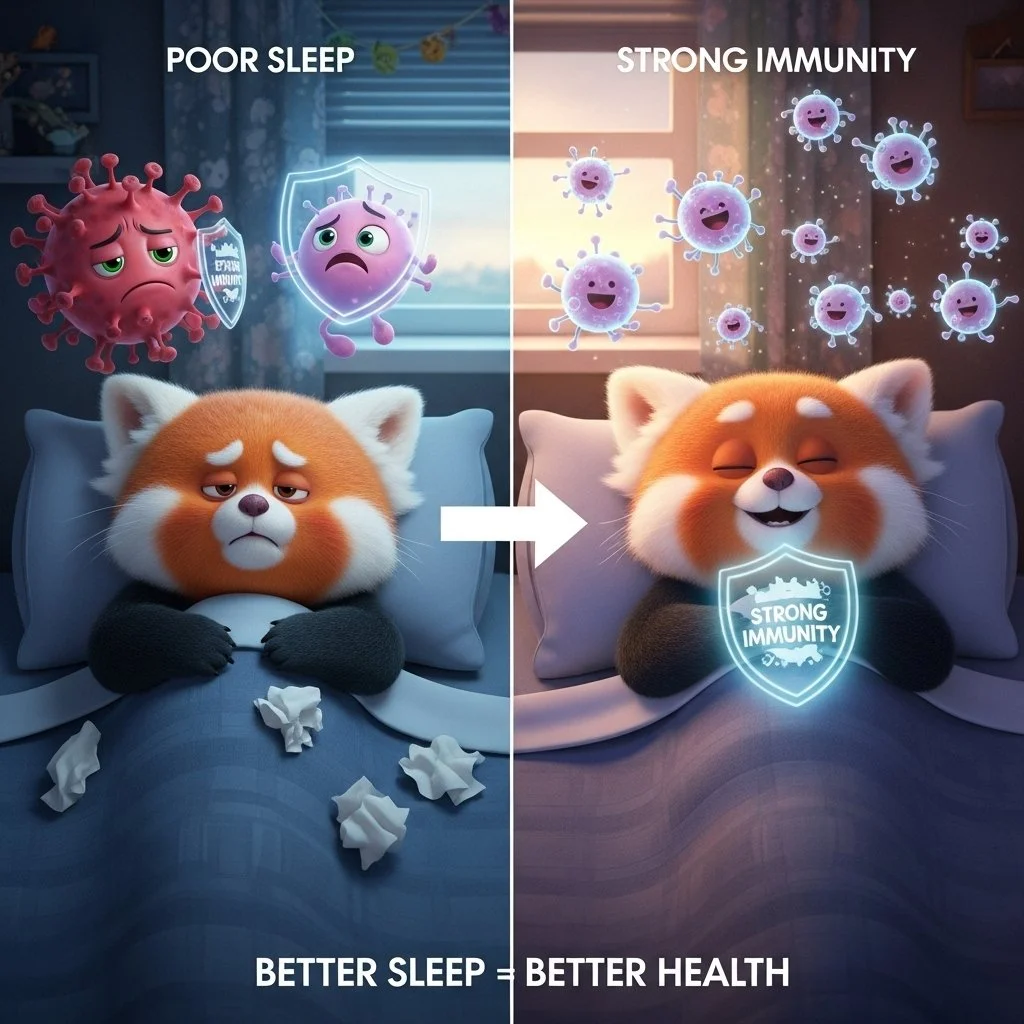
Are you constantly catching colds? Do you feel run down even after getting a few hours of sleep? If so, the real secret to boosting your body's defenses might not be in a bottle of vitamins, but in your bedtime routine. Sleep and immune function are deeply intertwined—they are two sides of the same health coin. When you don't get enough quality sleep, or when your body clock is out of sync, your immune system suffers a major hit, leaving you vulnerable to illness. This post will break down the science of how your nightly rest and daily rhythm act as your body's best defense, and we'll give you clear steps to start sleeping your way to better health today.
Why Does Sleep and Immune Function Matter So Much?
Think of your immune system as a highly trained army defending your body. During the day, while you're awake, the army is on patrol, reacting to immediate threats. But research shows that when you sleep, your body switches to a vital repair and reinforcement mode.
This is when the critical work of "immunological memory" happens. Specialized immune cells, called T cells, are trained and programmed to recognize and fight off germs they've met before. A landmark study in the Journal of Experimental Medicine highlighted that good sleep helps these T cells stick better to their targets, making them more effective at fighting off infection, especially after a vaccine. If you're consistently sleeping less than seven hours a night, you are actively disrupting this training process, essentially giving your body's defense forces a serious disadvantage. Simply put, quality sleep is non-negotiable for a strong defense.
How Does Your Body Clock Rule Your Immune Response?
Your circadian rhythm is your body's master clock—a 24-hour cycle that controls everything from when you feel hungry to when you feel sleepy. What many people don't realize is that this internal clock also dictates when and how strongly your immune system reacts.
A significant discovery published in Nature explained that the activity of many key immune cells is actually timed by your circadian rhythm. For example, some immune cells peak in number during the day, while certain anti-inflammatory signals are stronger at night. This timing is essential. If your sleep schedule is constantly changing—such as working different shifts or using your phone late at night—you are causing a major "jet lag" in your immune system. This desynchronization, or mismatch between your behavior and your internal clock, confuses your body's defense army, leading to inappropriate or weakened responses. When you keep a regular sleep-wake schedule, you help align your inner clock, making your immune responses more predictable and effective.
Can Your Sleep Schedule Predict If You'll Get Sick?
The length and quality of your sleep aren't just about feeling tired or rested; they are direct predictors of your health risk. Scientific evidence is clear: people who consistently get less than six hours of sleep a night are significantly more likely to catch a cold or the flu when exposed to viruses.
For instance, one crucial study in a recent Sleep journal found that people who regularly reported less than 5.7 hours of sleep were up to 4.5 times more likely to get sick after being exposed to the common cold virus compared to those who slept seven hours or more. This isn't just about feeling tired; it’s about a measurable impact on your defense mechanisms. When you sleep, your body releases small proteins called cytokines. These proteins are vital for fighting infection and inflammation. Poor sleep actually decreases the production of these protective cytokines and can increase the production of inflammatory markers, creating a vicious cycle that wears down your health. By prioritizing a consistent seven to nine hours of quality sleep, you are actively ensuring your body has the right tools to fight off infections.
Conclusion
The relationship between sleep and immune function is not a minor detail—it's a foundational pillar of good health. Your body needs darkness, consistency, and a low-stress environment to properly run its nightly defense and repair programs. Every time you prioritize your sleep, you are not just resting; you are actively engaging in preventative medicine. Don't wait until you're sick to care about your sleep. Start viewing your sleep as the ultimate, non-negotiable health boost.
-
Besedovsky, L., Ng, T., & Born, J. (2019). Sleep and immune function. Pflügers Archiv-European Journal of Physiology, 471(2), 295–307.
Man, K., Sun, Z., & Chen, J. (2020). Circadian rhythms in the immune system: the science of time-dependent defense. Nature Reviews Immunology, 20(6), 355–367.
Cohen, S., Doyle, W. J., Alonzi, A., Muehlbauer, P. A., & Turner, R. B. (2009). Sleep habits and susceptibility to the common cold. Archives of Internal Medicine, 169(1), 62–67.