Is Sleeping Too Much a Warning Sign?
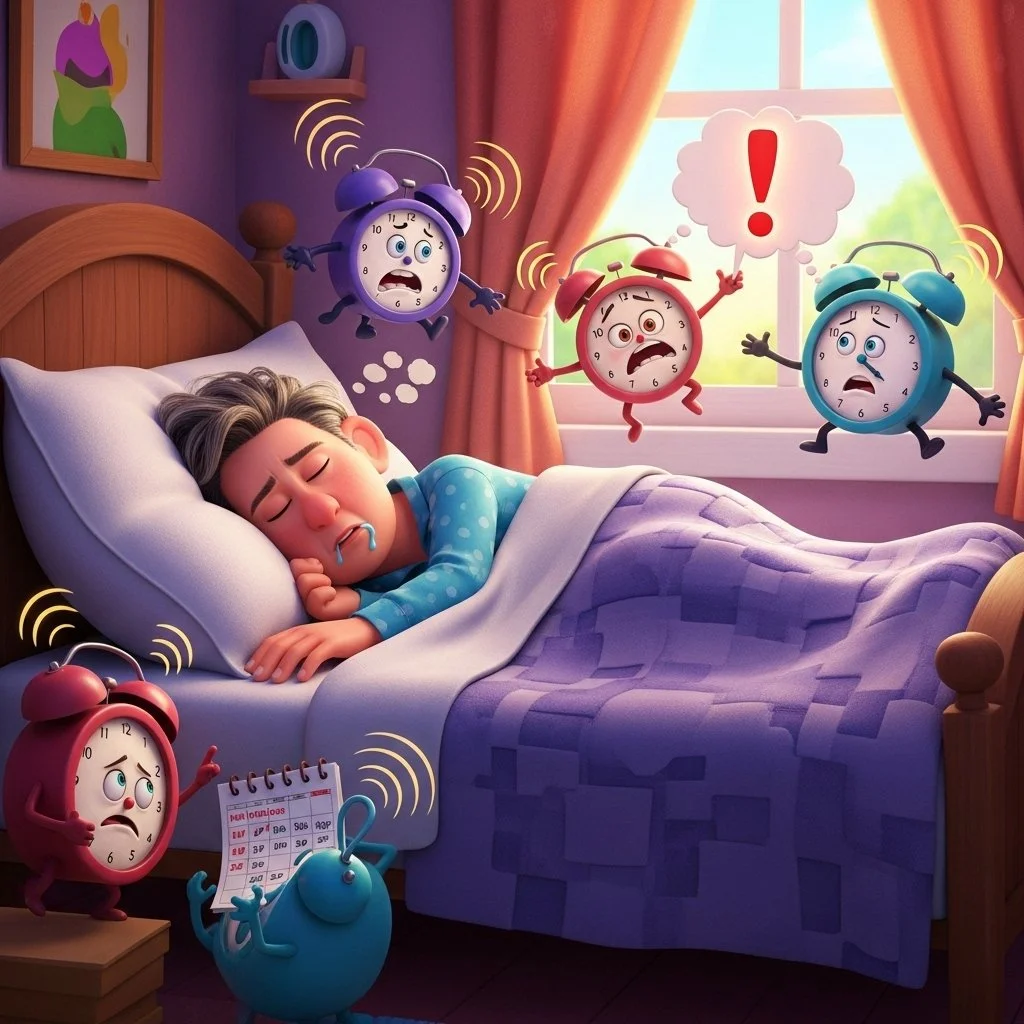
We often use the term "hypersomnia" to describe someone who seems to spend an excessive amount of time asleep. Interestingly, this word is most commonly associated with excessive daytime sleepiness (EDS)—a tendency to sleep a lot, or very frequently, during the day—rather than simply logging high hours at night.
But is a daytime desire to sleep really something to worry about?
The Natural Long Sleepers
When we see infants or teenagers sleeping a lot, we rarely panic. For babies, extended sleep is a natural part of rapid growth. For teenagers, a shift in their natural body clock (the "owl" tendency) means later wake-up times, often pushing their sleep well into the day. We understand these as biological needs, not health alarms.
But what about adults? For those whose body clock has matured and naturally returned to a more "lark" schedule, spending half the day asleep can feel highly unusual. While most people would question the reason behind such extreme daytime sleepiness, few connect it to a serious health issue.
When Sleepiness Becomes a Signal
Uncontrollable urges to sleep during the day, even after a seemingly full night's rest, can be a cry for attention from your body.
In many cases, the cause is simple: sleep deprivation. This is common for those juggling high stress and demanding work, leading to a disrupted circadian rhythm. Other factors that reduce nighttime sleep quality or quantity—like poor sleep habits, a noisy environment, illness, or conditions such as Sleep Apnea or Restless Legs Syndrome—can all manifest as overwhelming daytime sleepiness.
Additionally, certain non-sleep medical conditions like an underactive thyroid or depression can directly impact the brain, leading to a messed-up body clock and constant fatigue.
If your daytime sleepiness is just an occasional blip that resolves when stress or work pressure eases, you likely have nothing to worry about. However, if it's long-term and starts impacting your daily life, it’s crucial to seek professional medical advice to uncover the root cause.
The Danger of Drowsiness
Daytime sleepiness can be more than just a minor inconvenience; it can be downright dangerous. The urge to sleep isn't a simple tired feeling—it's a powerful demand. Imagine fighting that urge while driving, operating machinery, or in a critical meeting. Even brief moments of dozing or "zoning out" severely reduce focus and efficiency.
Other symptoms of excessive sleepiness include anxiety, irritability, slow thinking, and slurred speech. At its worst, this can jeopardize your family life, career, and, critically, the safety of yourself and others.
When Sleepiness Is the Sickness
Can excessive sleepiness be a disease itself, rather than a symptom of something else? The answer is yes.
One such disorder is Idiopathic Hypersomnia (IH). The word "idiopathic" means the cause is unknown, ruling out other clear diseases, lack of sleep, or poor sleep habits as the culprits.
Unlike regular sleepiness, IH is a severe, sudden, and uncontrollable sleep abnormality. Patients not only have overwhelming daytime sleep urges but may also sleep much longer than average at night. Crucially, their long sleep and daytime naps are completely unrefreshing—there is no benefit from "catching up on sleep."
IH is often nicknamed "sleep drunkenness" because patients frequently wake up feeling profoundly groggy, confused, cognitively impaired, and with fragmented memories, much like a severe hangover. These moments of "waking up drunk" do not help them feel rested and severely disrupt daily life.
Hypersomnia vs. Narcolepsy: Not the Same
Some people confuse severe hypersomnia with Narcolepsy, which involves sudden, uncontrollable sleep attacks and, in its most common form (Type 1), cataplexy—a sudden loss of muscle tone triggered by strong emotions like laughter.
While Narcolepsy also results in excessive daytime sleepiness, the key difference is the speed and nature of the onset. Narcolepsy emphasizes the rapid and uncontrollable "attack" where the patient instantly enters a sleep state. Hypersomnia emphasizes the sheer quantity of sleep and the constant, overwhelming need for it. The two are distinct neurological disorders.
A Final Thought
We tend to focus on the health consequences of sleeping too little or sleeping poorly. But we must recognize that at the other end of the spectrum, sleeping too much can also be a significant warning sign.
It is a reminder to pay attention to your emotional stress, your daily routine, and whether your sleep is truly restorative. If you find yourself chronically, severely sleepy, don't dismiss it as just being tired. Seek a professional opinion to rule out a hidden condition and ensure you are not overlooking a crucial message from your brain.
-
Berkowski, J. A., & Shelgikar, A. V. (2016). Disorders of excessive daytime sleepiness including narcolepsy and idiopathic hypersomnia. Sleep medicine clinics, 11(3), 365–378.
Gandhi, K. D., Juhra, C. K., & Olson, E. J. (2021). Excessive daytime sleepiness: A clinical review. Mayo Clinic Proceedings, 96(5), 1334–1353.
Trotti, L. M., & Arnulf, I. (2021). Idiopathic hypersomnia and other hypersomnia syndromes. Neurotherapeutics, 18(1), 20–31.