The Gut-Sleep Revolution: Gut Health Unlocks High-Quality Sleep
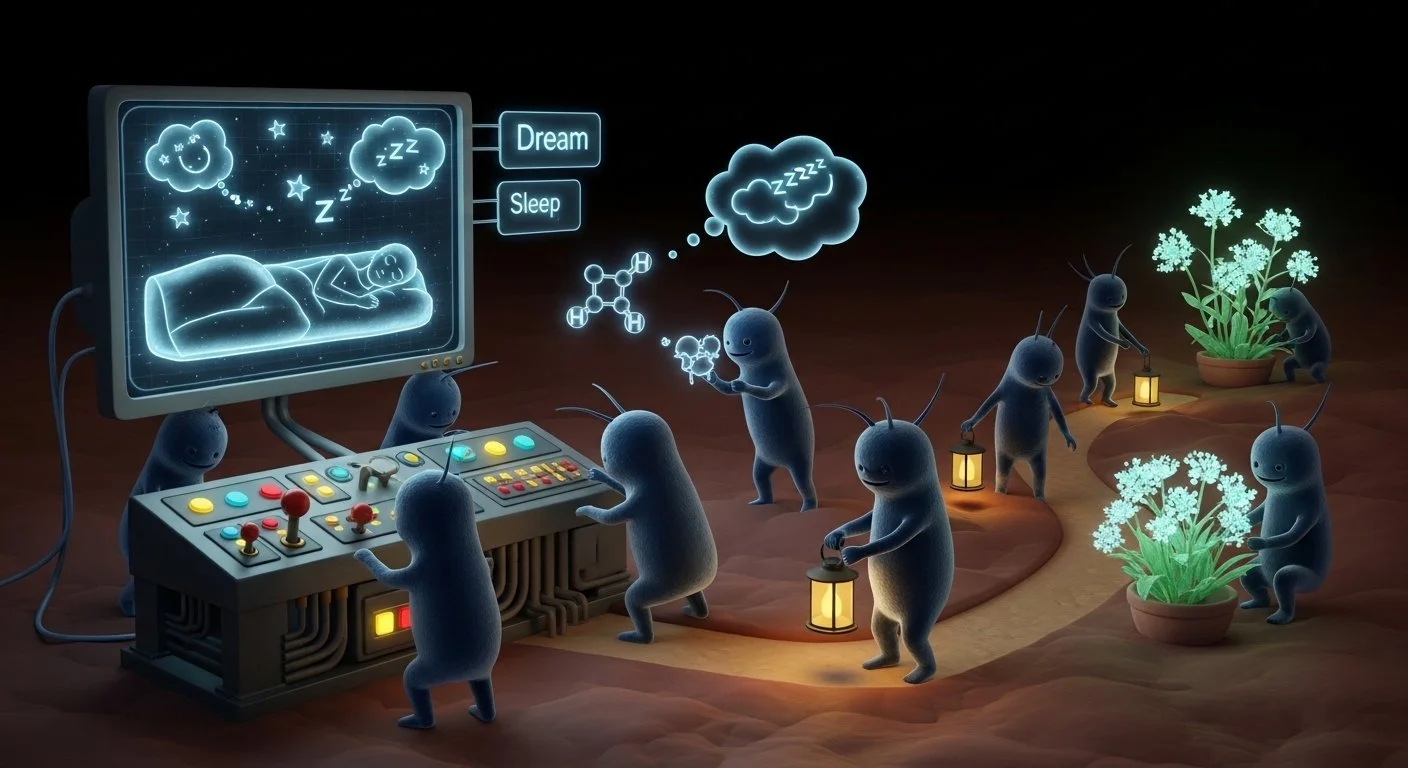
Naturally, we view sleep as a process that happened strictly from the neck up. We focused on melatonin, the pineal gland, and the "off switch" in our brains. But recent research have revealed a much more complex reality. Your gut and your brain are locked in a 24-hour conversation through the vagus nerve, a biological superhighway that carries more messages from your gut to your brain than the other way around.
When your gut microbiome is diverse and healthy, it acts like a high-end concierge for your sleep. These bacteria produce neurochemicals that signal the brain to "power down." However, when the gut is in a state of dysbiosis (an imbalance of "good" versus "bad" bacteria), the messages sent to the brain are frantic and inflammatory. This internal noise prevents the brain from sliding into the deeper stages of sleep, particularly Slow-Wave Sleep and REM Sleep. You might be unconscious, but your brain is essentially "listening" to a chaotic argument happening in your digestive tract, keeping you in a state of light, unrefreshing slumber.
The Serotonin Secret
Most people associate serotonin with mood. What is less commonly known is that roughly 95% of your body’s serotonin is produced in the gut by specific bacteria, such as Streptococcus and Enterococcus. Serotonin is the direct precursor to melatonin; without enough of it, your brain simply doesn't have the raw materials to build a "sleep bridge" into the night.
Think of your gut bacteria as a construction crew. If the crew is understaffed or fed the wrong fuel, they can’t produce the serotonin required to flood your system when the sun goes down. You might feel tired, but that deep, heavy sleepiness that usually pulls you under remains elusive. By focusing on the microbiome, we aren't just masking the symptoms of insomnia; we are ensuring the factory has the supplies it needs to manufacture natural, high-quality sedation from the inside out.
The Bacteria Clock
Every cell in your body has a "clock," but your gut bacteria have their own independent rhythms. These microbes follow a strict schedule: some are active during the day to help with digestion, while others "wake up" at night to perform maintenance on your gut lining. This is known as microbial circadian rhythmicity.
When we eat at erratic times or consume highly processed foods, we desynchronize these bacterial clocks. This creates a "jetlag" effect within the gut. When your gut microbes are "awake" and producing metabolic byproducts at 2 AM, it signals to your brain that it’s time to be alert. This is why late-night snacking on sugar or refined carbs doesn't just cause indigestion—it literally resets your internal clock, telling your brain to stay in a "ready for action" state. Aligning your microbiome’s schedule with your brain’s schedule is the most overlooked "hack" in modern society.
Short-Chain Fatty Acids (Butyrate)
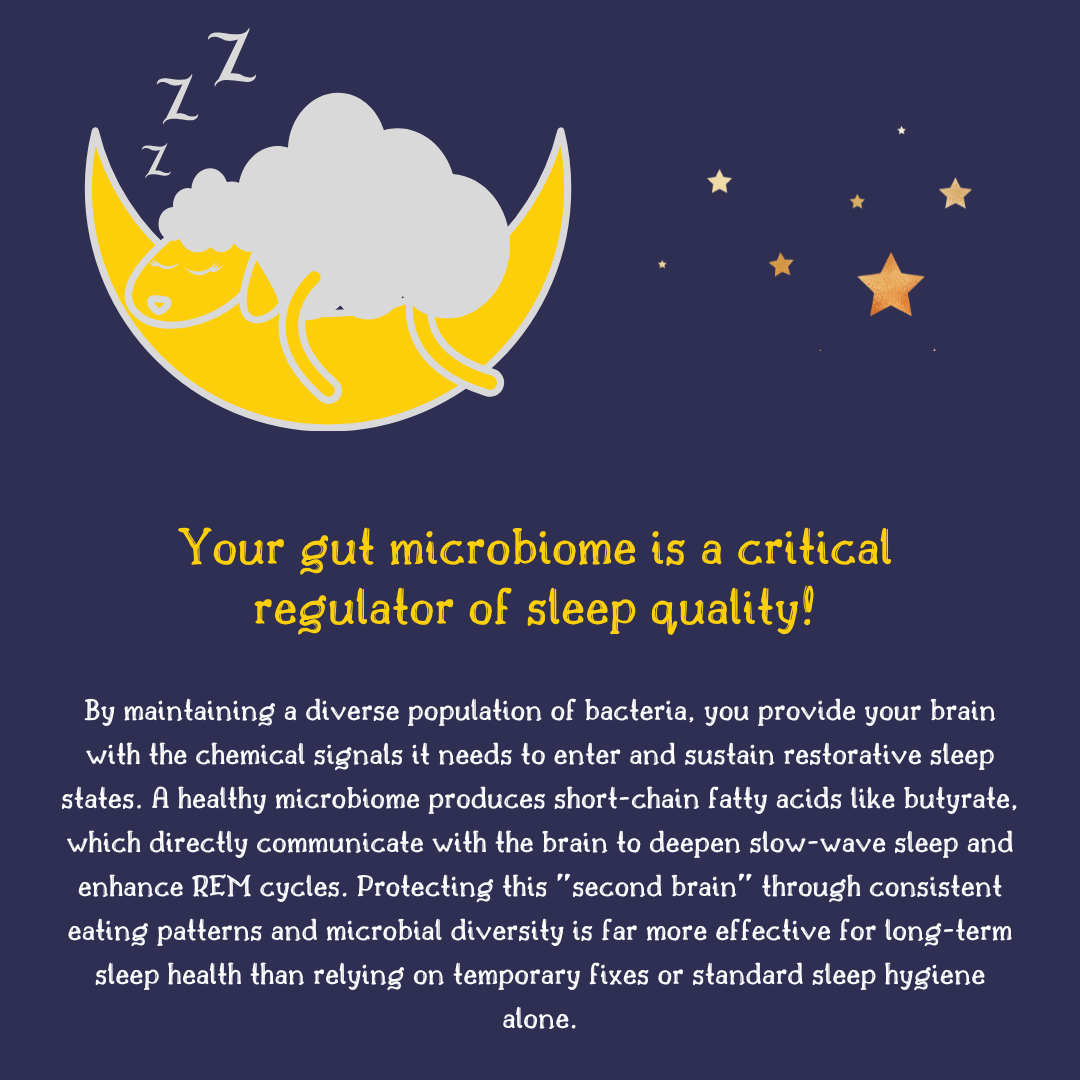
The real magic of the microbiome lies in its waste products. When your "good" bacteria ferment prebiotic fibers, they produce Short-Chain Fatty Acids (SCFAs), most notably butyrate. Recent studies in 2024 and 2025 have shown that butyrate is a potent signaling molecule that can cross the blood-brain barrier.
Once in the brain, butyrate acts as a natural sleep promoter. It has been shown to increase the duration of Non-REM sleep and improve the "density" of REM sleep—the stage where we process emotions and consolidate memories (our dream state). If you aren't producing enough butyrate because your microbiome is depleted, you lose the "emotional carwash" that REM sleep provides, leading to increased anxiety and decreased creativity the following day. With that being said, this isn't just about feeling rested; it's also about the cognitive architecture of your mind.
The Post-Antibiotic Sleep Slump
Many people trace the start of their chronic sleep issues back to a specific illness or a round of heavy antibiotics. This isn't a coincidence. Antibiotics are "scorched earth" for the microbiome, often wiping out the very strains responsible for good sleep regulation.
Without a healthy population of Lactobacillus and Bifidobacterium, your brain loses its natural brakes. This results in a "wired but tired" feeling where your mind races the moment your head hits the pillow. Restoring these specific strains through psychobiotics (probiotics designed specifically for mental and sleep health) is the new frontier of insomnia treatment. Instead of relying on sedative drugs that often bypass the most restorative stages of sleep, we are learning to replant the "dream garden" in the gut to restore the brain's natural ability to self-soothe.
Conclusion
The journey to a better night's sleep doesn't start with a new mattress or a darker room; it starts at the end of your fork and within the complex ecosystem of your gut. By understanding that our microbiome is the primary driver of our sleep-wake signals, we can start "nurturing" it from within. When you feed your microbes the right nutrients and respect their internal clocks, you aren't just getting more hours of sleep—you are gaining access to the deep, transformative dream states that allow your body and mind to truly heal.
-
Anderson, J. R., Carroll, I., & Azcarate-Peril, M. A. (2022). A preliminary investigation of enteric microbiome-sleep relationships in adults. Sleep Health, 8(2), 183–191.
Cryan, J. F., O'Riordan, K. J., Cowan, C. S. M., et al. (2024). The microbiota-gut-brain axis: From fundamentals to medical-grade psychobiotics. Nature Reviews Gastroenterology & Hepatology, 21(1), 15–32.
Grosheva, I., & Elinav, E. (2023). Circadian rhythms of the gut microbiome and their impact on host metabolism and sleep. JAMA Network Open, 6(5), e231456.
Smith, R. P., Easson, C., Lyle, S. M., et al. (2021). Gut microbiome diversity is associated with sleep physiology in humans. PLOS ONE, 14(10), e0222394.
Wang, Z., & Wang, Z. (2025). Short-chain fatty acids as mediators of the gut-brain-sleep axis: A new frontier in circadian medicine. Sleep Medicine Reviews, 72, 101845.