🌙 Why You're Still Hungry: How Better Sleep Unlocks Natural Appetite Control
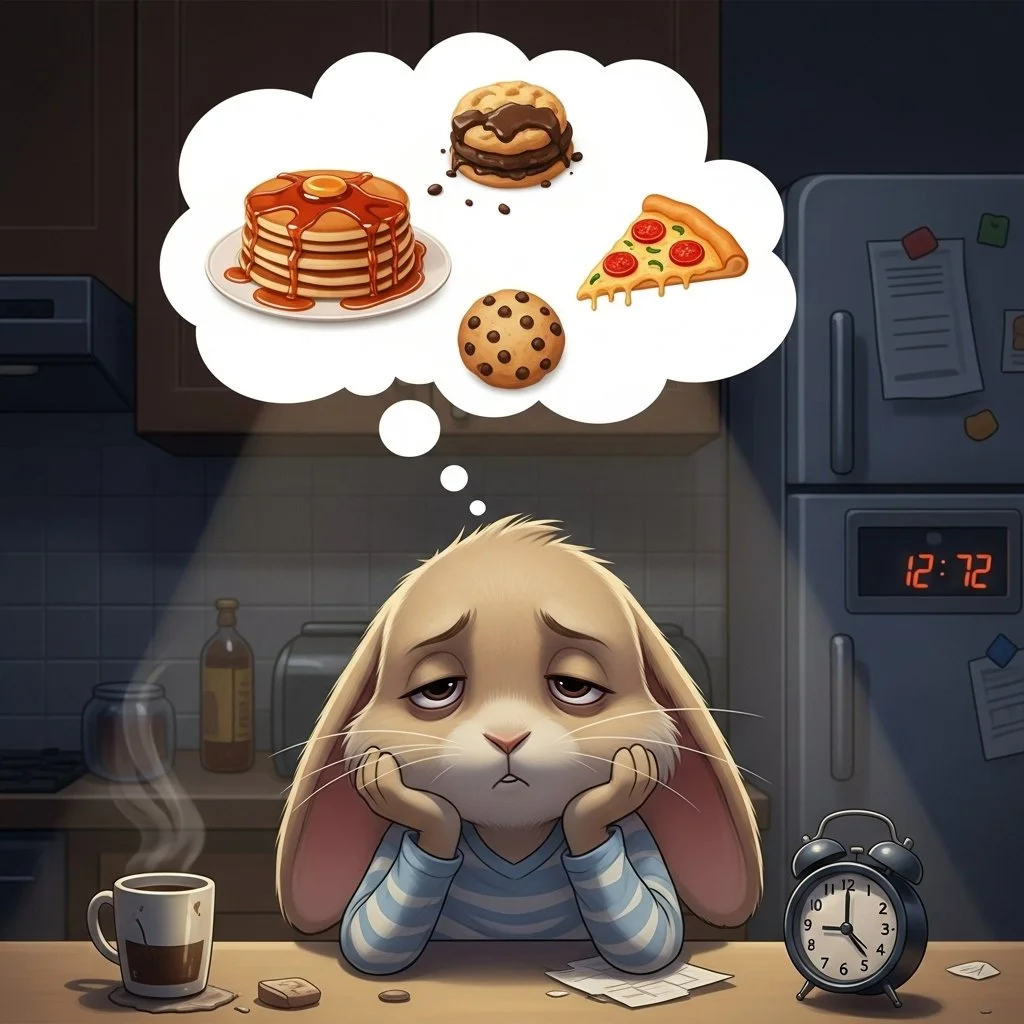
Do you ever feel like your hunger is turned up to maximum volume, no matter what you eat? That intense desire for sweets or salty, crunchy snacks, especially when the clock ticks toward evening? You might assume it's just stress or a lack of self-control. But here’s the crucial truth: your sleep schedule is secretly pulling the strings on your appetite. Not getting enough high-quality sleep doesn't just make you tired; it biologically changes the chemistry in your body, hijacking your hunger and fullness signals. This article will show you exactly how this happens and give you a clear, science-backed roadmap to restore your sleep and appetite control so you can manage your weight and feel better, effortlessly.
How Does Lack of Sleep Hijack Your Hunger Hormones?
When you’re well-rested, your body runs like a well-tuned machine, keeping your hunger and fullness hormones balanced. But when you skimp on sleep—even just for one night—that delicate balance is thrown into chaos.
Two hormones are the main actors in this control system: Ghrelin and Leptin. Think of Ghrelin as the "Go" signal for hunger; it tells your brain it's time to eat. Leptin is the "Stop" signal, telling your brain you’re full and satisfied.
Ghrelin (The Hunger Hormone): Research shows that when you don't sleep enough, your body produces more ghrelin. This means the "Go, eat!" signal is louder and more persistent.
Leptin (The Satiety Hormone): At the same time, your body produces less leptin. The "Stop, I'm full" signal becomes weaker.
The result is a devastating hormonal double-whammy: you feel hungrier, and you have a much harder time feeling satisfied after you eat. Studies have confirmed this, noting that after a night of sleep restriction, people reported significantly stronger feelings of hunger. This hormonal change is a key biological mechanism explaining the strong link between poor sleep and appetite control and increased risk of weight gain.
Why Do Sleep-Deprived Cravings Go Straight for Junk Food?
It's bad enough that you're hungrier, but the type of hunger is also a major problem. When you’re tired, you don't just want a carrot stick; you crave high-calorie, high-carbohydrate, or high-fat comfort foods like chips, cookies, and fast food. Why does this happen?
The answer lies in your brain. Sleep deprivation affects the prefrontal cortex, the part of your brain responsible for complex decision-making, judgment, and willpower. When you're tired, this part of the brain is sluggish, making it much harder to resist tempting foods.
But it's more than just weak willpower. Lack of sleep also seems to stimulate the reward centers in your brain—the same areas that light up when you eat highly enjoyable foods. One study found that after just two nights of short sleep, young men had a 71% increase in the ratio of ghrelin to leptin, and they reported a huge surge in the desire for sweet, salty, and starchy foods. Your body, in its sleep-deprived state, is desperately looking for a quick source of energy (sugar) to compensate for the fatigue, and your weakened decision-making skills make it nearly impossible to say no.
Does Improving Your Sleep and Appetite Control Actually Help with Weight?
Yes. The connection between consistently short sleep and a higher body mass index (BMI) is well-documented in large-scale studies. But the good news is that just as poor sleep can hurt your appetite, better sleep can help heal it.
When you consistently get the recommended 7-9 hours of sleep per night, you give your body a chance to rebalance those critical hormones. As your Ghrelin levels naturally drop and your Leptin levels return to normal, your hunger signals quiet down, and you start feeling full sooner.
Furthermore, getting enough sleep provides a non-food source of energy. When you feel energized from a great night's rest, you're less likely to seek out a sugary snack for a quick pick-me-up. You're also more likely to have the mental clarity and motivation to make healthier food choices and be more physically active, creating a positive feedback loop for your overall health.
This isn't just about what happens during the day. Another area of exciting research is how certain eating patterns, like time-restricted eating (TRE), can improve both sleep and appetite control together. A randomized controlled trial found that an 8-week, 10-hour TRE protocol positively affected both appetite regulation (increased satiety/fullness) and improved sleep characteristics in young adults with poor sleep quality. While TRE isn't the solution for everyone, it points to the profound, interconnected role that your circadian rhythm—your body's internal clock—plays in managing both your sleep and when and how you eat.
Are You Getting Enough Sleep? The $7$ to $9$-Hour Sweet Spot
If you’re sleeping less than 7 hours a night, especially on a regular basis, you are likely in the danger zone for disrupted sleep and appetite control. The National Sleep Foundation recommends that most adults aim for 7 to 9 hours of sleep per night.
While everyone's needs are slightly different, the key is consistency. Irregular sleep schedules—going to bed late during the week and trying to "catch up" on the weekend—can throw your body's internal clock (your circadian rhythm) into disarray. This disruption can make the hormonal problems even worse, leading to increased cravings and making your body less efficient at managing sugar and fat.
Think of your body's clock like a conductor leading an orchestra. When the conductor (your sleep schedule) is consistent, all the instruments (your hormones and bodily functions) play in harmony. When the conductor is erratic, the music (your metabolism, energy, and hunger) sounds chaotic. Prioritizing a consistent bedtime and wake-up time is one of the most powerful steps you can take to calm your cravings and re-establish natural sleep and appetite control.
Your Action Plan: 5 Simple Steps to Better Sleep and Appetite Control
The scientific evidence is clear: fixing your sleep is a powerful and non-dieting way to manage your appetite. Here are five concrete, easy-to-implement steps to take, starting tonight:
Set a "Sleep Alarm" (Not a Wake-Up Alarm): Choose a bedtime that guarantees you 7-9 hours of sleep and set an alarm for 30 minutes before that time. When this alarm goes off, stop whatever you are doing (TV, work, phone) and start your calming bedtime routine.
Cut Off Calorie Intake 3 Hours Before Bed: While time-restricted eating (TRE) is a whole strategy, a simple rule is to stop eating all meals and snacks at least 3 hours before you plan to go to sleep. This gives your digestive system time to wind down before your body enters its fasting-and-rest phase, which can support your natural hormonal balance.
Use Light to Control Your Clock: Get 15 minutes of bright natural sunlight exposure first thing in the morning to signal to your brain that the day has started. In the evening, dim your household lights and avoid blue light from screens (phones, tablets, bright TVs) for at least an hour before bed. Light is the master switch for your circadian rhythm.
Create a Temperature Sweet Spot: Research suggests that a cooler room temperature is ideal for sleep. Most sleep experts recommend setting your bedroom thermostat between 60F and 67F (15C and 19C) to help your body lower its core temperature for better, deeper sleep.
Ditch the Nightcap and Caffeine After Lunch: Alcohol disrupts the quality of your sleep, preventing you from getting the restorative deep and REM cycles you need for hormonal balance. Caffeine can stay in your system for hours, and any intake after 2 PM can interfere with your ability to fall asleep.
Conclusion
You now know the powerful, biological reason why your appetite seems to rage out of control when you're tired. It’s not a moral failing; it’s a hormonal one, driven by a simple imbalance of Ghrelin (up) and Leptin (down). The good news is that you have the power to fix this, not by struggling with diet rules, but by prioritizing rest. Making small, consistent changes to your sleep habits is the most effective way to quiet those relentless cravings, restore your natural sleep and appetite control, and take a huge step toward a healthier, more energized life.
Ready to start? Pick just one of the 5 action steps and commit to trying it tonight. Your appetite (and your waistline) will thank you.
-
Schmid, S. M., Hallschmid, M., Jauch-Chara, K., Born, J., & Schultes, B. (2008). A single night of sleep deprivation increases ghrelin levels and feelings of hunger in normal-weight healthy men. Journal of Sleep Research, 17(3), 331–334.
Donga, E., van Dijk, M., van Dijk, J. G., Biermasz, G. G., Lammers, G. J., van Kralingen, K. W., & Pijl, H. (2010). A single night of partial sleep deprivation induces insulin resistance in healthy subjects. The Journal of Clinical Endocrinology & Metabolism, 95(7), E202–E206.
Marin-Guerrero, S., Delpino, F. M., Navarrete-Flores, R., Carrasco, L., Gómez-Soto, K. M., Almarza-Cánovas, P., & Palou, M. (2024). Time-restricted eating improves appetite regulation and sleep characteristics in adults with poor sleep quality. Nutrition & Metabolism, 21(1), 16.