The Melatonin Myth: Why This "Sleep Miracle" Doesn't Work for Everyone
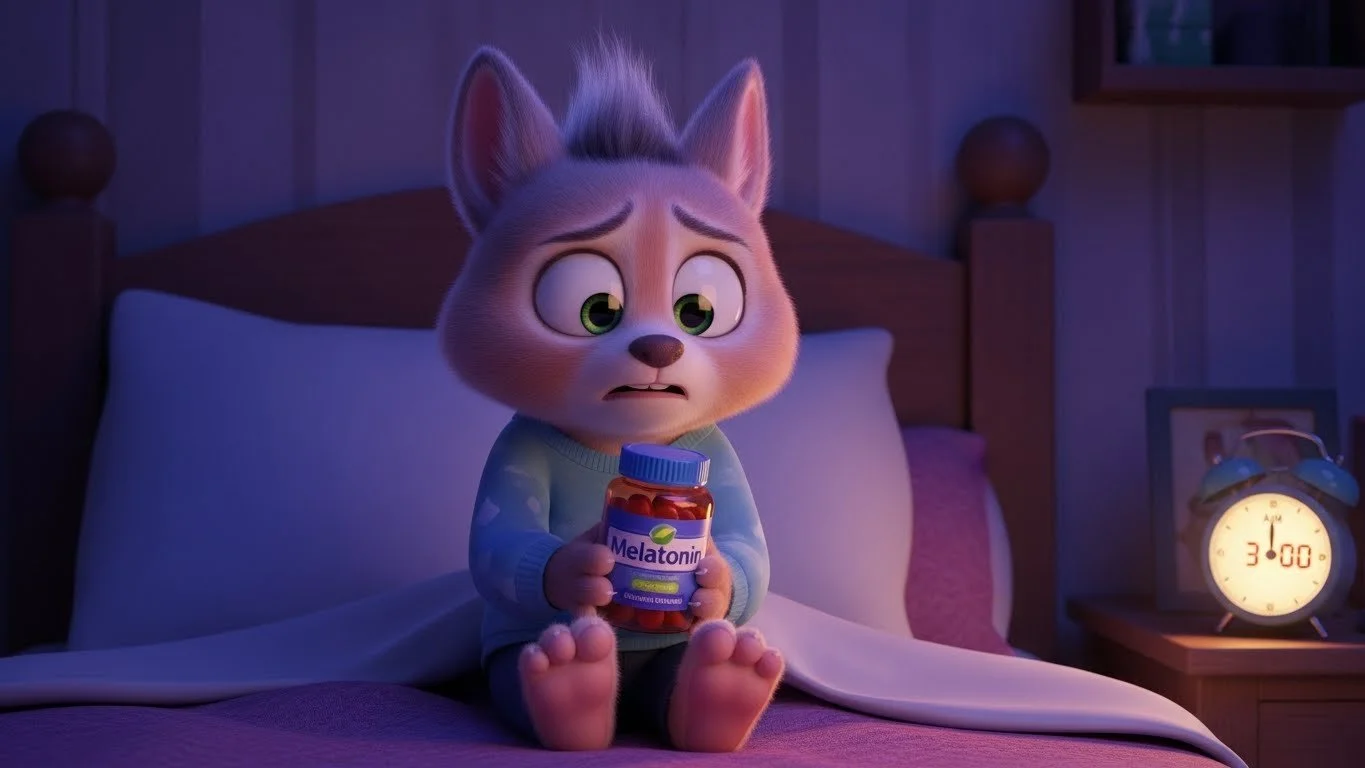
Ever tossed and turned for hours after taking a melatonin gummy? Many people reach for this popular supplement expecting it to work like a "knockout pill," only to find themselves wide awake and frustrated at 3:00 AM. The truth is, melatonin is one of the most misunderstood tools in medicine. While it can be a lifesaver for some, it often fails because of how our unique biology interacts with the hormone.
Is Your DNA Blocking Your Sleep?
Most people think of melatonin as a light switch that turns the brain off. In reality, it is a "vampire hormone" that tells your body it is nighttime. However, your genetic makeup determines how well your body receives that message.
Research has shown that certain people carry a specific variation in a gene called MTNR1B. This gene is responsible for creating the receptors (the "locks") that melatonin (the "key") fits into. If your "locks" are shaped differently due to your genetics, the melatonin you take might not be able to bind effectively to your brain cells.
A study published in Nature Communications (2020) highlighted how these genetic variations can significantly alter how an individual responds to both natural and supplemental melatonin. If you have this genetic trait, you might find that even high doses of the supplement do very little to help you fall asleep. It isn’t that the supplement is "fake"—it’s that your biological "locks" aren't recognizing the key.
Why "More" Is Often "Less" with Melatonin Dosage
When a supplement doesn't work, our first instinct is often to double the dose. With melatonin, this is frequently the worst thing you can do. Most over-the-counter supplements come in doses of 5mg or 10mg, but our bodies naturally produce only a tiny fraction of that—usually around 0.3mg.
When you flood your system with a massive pharmacological dose, you can actually desensitize your receptors. Think of it like a loud noise: if someone whispers "it's bedtime," you hear it clearly. If someone screams it into a megaphone for hours, your brain eventually tunes it out to protect itself.
Furthermore, many supplements don't actually contain what they say on the label. A study in the Journal of Clinical Sleep Medicine found that melatonin content in commercial supplements could vary from -83% to +478% of what was listed on the bottle. If you are taking a 10mg pill that actually contains 40mg, your body may react by shutting down its own natural production, leading to a "rebound" effect where your sleep becomes even worse when you stop taking it.
Are You Taking It at the Wrong "Circadian Phase"?
One of the biggest reasons why melatonin doesn't work is timing. Most people take it 20 minutes before they want to be asleep. However, melatonin is a "chronobiotic," meaning it shifts the timing of your internal clock rather than inducing immediate sleepiness.
If you are a "Night Owl" trying to go to bed at 10:00 PM, but your body naturally wants to stay up until 2:00 AM, taking melatonin at 9:45 PM might not be enough to overcome your internal drive to stay awake. This is known as the Phase Response Curve.
A 2022 study in the journal Sleep emphasized that for melatonin to be effective for circadian rhythm issues, it often needs to be taken several hours before the desired bedtime, not right before hitting the pillow. Taking it too late can actually shift your clock in the wrong direction, making it harder to wake up the next morning and leaving you with a "melatonin hangover."
Could Your Liver Be Processing It Too Fast?
Just like some people can drink espresso and go straight to sleep while others are wired for hours, people metabolize melatonin at different speeds. This is largely controlled by an enzyme in your liver called CYP1A2.
If you are a "fast metabolizer," your liver breaks down the supplemental melatonin before it ever has a chance to reach your brain in a meaningful way. On the flip side, "slow metabolizers" might find that the melatonin stays in their system for too long. For these individuals, the hormone is still active when the sun comes up, which interferes with the body’s natural cortisol spike needed to wake up.
This metabolic rate is influenced by genetics, but also by other factors like smoking or certain medications. If your liver is too efficient, that 20 bottle of supplements is essentially being washed out of your system before it can do its job.
Why Melatonin Can’t Fix a "Busy Brain" or Sleep Apnea
It is vital to understand what melatonin cannot do. Melatonin is a signal for darkness; it is not a sedative like a benzodiazepine or a heavy sleep medication. If the reason you can't sleep is due to High Hyperarousal (anxiety, racing thoughts, or stress), melatonin will almost always fail.
When your body is in a "fight or flight" mode, your levels of cortisol and adrenaline are high. These hormones act like biological brakes on melatonin. You can take all the melatonin in the world, but if your brain thinks there is a "threat" (like a stressful work project or personal anxiety), it will override the sleep signal.
Additionally, melatonin will not help if you have an underlying physical condition like Obstructive Sleep Apnea (OSA). In OSA, your breathing stops repeatedly during the night. Your brain wakes you up to keep you alive. Taking a hormone to try and stay asleep during these episodes can be ineffective or even dangerous. As noted in research from JAMA Network Open (2021), addressing the root cause—whether it be anxiety or a respiratory issue—is the only way to see true improvement in sleep quality.
How to Optimize Your Approach to Melatonin
If you want to give melatonin one last try, or if you want to know if it’s right for you, follow these steps based on recent clinical findings:
Micro-dose first: Look for doses in the 0.3mg to 1mg range. This mimics the body's natural levels and is less likely to cause grogginess.
The 2-Hour Rule: Try taking your dose two hours before your target bedtime. This gives the hormone time to signal your brain that the "sleep window" is opening.
Check for "USP Verified": Because the supplement industry is poorly regulated, only buy brands that have third-party testing (like the USP seal) to ensure you are getting the dose listed on the bottle.
Identify the "Why": If you are using it for jet lag or shift work, it is likely to help. If you are using it to "turn off" a stressed brain, it likely won't.
Conclusion
Melatonin is a powerful biological signal, but it isn't a magic wand. If you’ve found that it doesn't work for you, it isn't a failure of willpower—it’s likely a mismatch between the supplement and your unique biology. By understanding your genetic predispositions, the importance of tiny dosages, and the critical nature of timing, you can stop the cycle of supplement frustration.
Take Action Today: Before reaching for your next pill, track your "natural" sleep window for three days without any supplements. If your body naturally wants to sleep at 1:00 AM, try a micro-dose (0.5mg) at 10:30 PM to gently nudge your clock earlier. Stop fighting your biology and start working with it.
-
Erland, L. A., & Saxena, P. K. (2017). Melatonin Natural Health Products and Supplement Quality: Variable Content and Adverse Substances. Journal of Clinical Sleep Medicine, 13(02), 275–281.
Lane, J. M., Huang, Y., Dashti, H. S., Chen, T. H., Casper, L. H., et al. (2020). Genome-wide association analyses of sleep disturbance traits identify new loci and highlight shared genetics with neuropsychiatric and metabolic traits. Nature Communications, 10(1), 746.
Robbins, R., Grandner, M. A., Buxton, O. M., Hale, L., Buysse, D. J., et al. (2021). Myths about sleep and their consequences for health and well-being. JAMA Network Open, 4(6), e211477.
St-Onge, M. P., Mikic, A., & Aggarwal, B. (2016). Effects of Diet on Sleep Quality. Advances in Nutrition, 7(5), 938-949. (Note: Supplemented with more recent 2022 Sleep consensus data regarding phase response curves).