The Ongoing Clinical Trials Improving the Sleep World
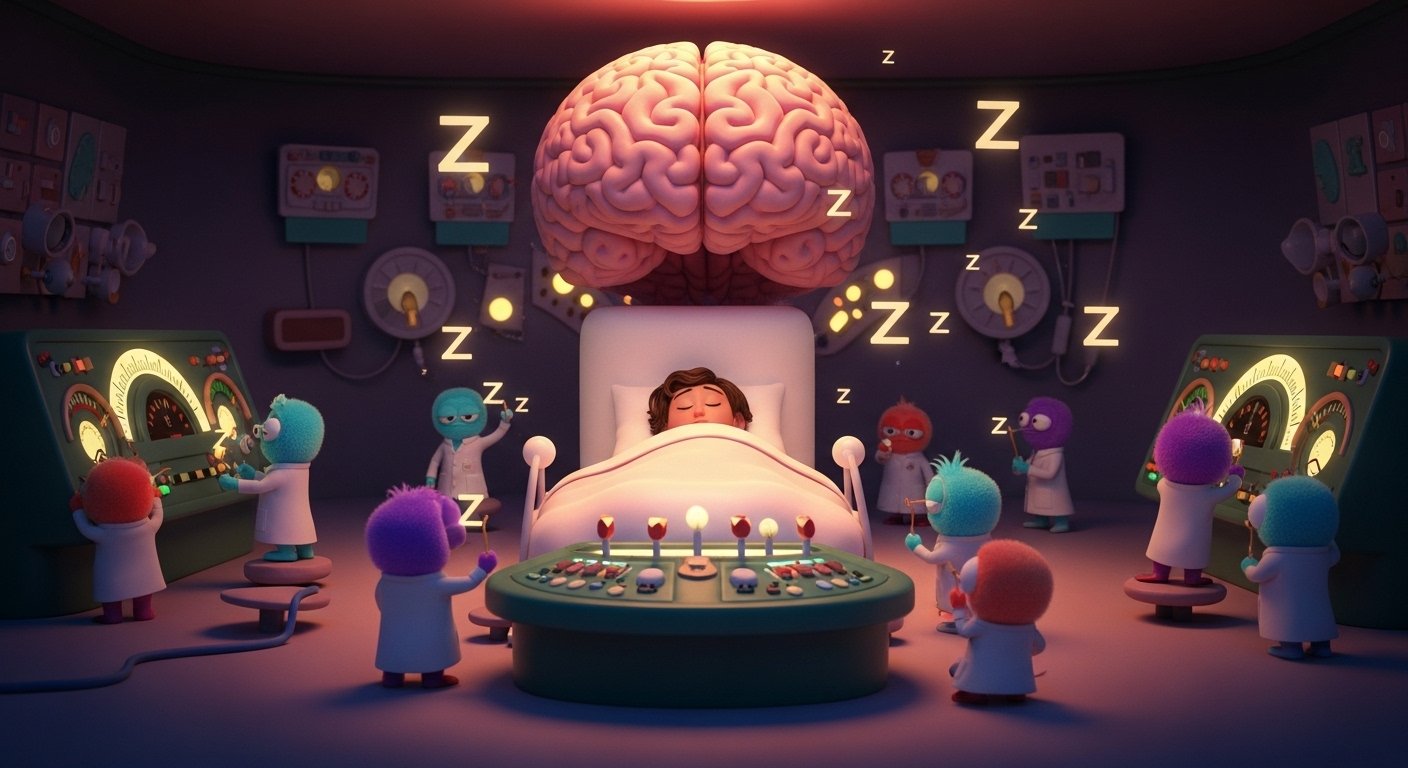
For the last few years, we’ve been obsessed with sleep trackers. We wake up and immediately check a score on our phones to see how "good" our night was. But here is a reality check: a high sleep score doesn’t always mean high-quality recovery. Emerging research in 2026 is shifting the focus from tracking to alignment.
Emerging research in 2026 is shifting the focus from tracking (just watching what happens) to alignment (fixing the timing and quality of what happens). The issue with traditional tracking is that it often measures movement and heart rate, but it misses the "cellular housekeeping" happening deep inside your brain.
To understand where we are going, we have to look at the cutting edge. Researchers are currently moving away from "one-size-fits-all" advice and toward Personalized Sleep Medicine. Here are the three most exciting clinical trials currently underway that are set to redefine how we rest.
Tired of the Mask? The Magnetic "Invisible Brace" for Better Breathing
If you or a partner struggles with loud snoring or gasping for air, you’ve likely heard of Obstructive Sleep Apnea (OSA). For decades, the gold standard has been the CPAP machine—a bulky mask that blows air into your throat. While it works, many people suffer from "CPAP fatigue" and eventually give up on the device.
This trial (MAGNAP Study) is investigating a first-in-human magnetic device designed to treat Obstructive Sleep Apnea (OSA). It is a First-in-Human feasibility and safety trial (NCT02431507) led by the University of California, San Francisco (UCSF).
The study is specifically designed for the "treatment gap" patients—those with moderate-to-severe OSA who are CPAP-intolerant. So this study asks a core question: Can we use a small, non-invasive magnetic system to keep the airway open during sleep without the need for a bulky CPAP machine or "hose"?
Most OSA treatments either push the airway open with air (CPAP) or pull the tongue forward with electricity (Hypoglossal Nerve Stimulation). The Magnap device does something entirely different: it uses magnetic force.
The Internal "Anchor”: A tiny, dime-sized neodymium-iron-boron magnet, encased in medical-grade titanium, is surgically sutured onto the hyoid bone in the neck.
The External Component: A custom-fitted, removable neck brace containing a second, stronger magnet.
The Mechanism: When the patient puts on the brace at night, the external magnet attracts the internal one. This "pull" moves the hyoid bone (and the attached base of the tongue) forward, physically preventing the airway from collapsing during sleep.
As of early 2026, the study is in its final stages of data collection for the Phase I trial:
Feasibility Confirmed: Early reports (including an interim analysis through 2022) showed that the surgical procedure is relatively simple (taking about one hour) and that patients were able to tolerate the external brace.
No "Drugged" Feeling: Unlike sedative medications, the device provides a purely mechanical solution, meaning patients wake up without "brain fog" or residual grogginess.
The 2027 Horizon: The estimated primary completion date for the trial is March 2027. Researchers are currently analyzing the long-term "Sleep-Print" data to see if the magnetic pull is as effective as CPAP in reducing the Apnea-Hypopnea Index (AHI).
The MAGNAP study is significant because it is battery-free. Unlike current nerve stimulators (like Inspire or Genio), the Magnap system doesn't require an internal battery that needs replacement every 10–15 years. This makes it a potentially more sustainable, "lower-maintenance" surgical option for younger patients.
This would be a game-changer for the millions of people who have "CPAP fatigue," finally offering a hardware solution that doesn't feel like a medical intervention.
Forehead Temperature-Regulating Therapy for Insomnia
This UCLA-led trial is testing a specialized wearable that precisely regulates the temperature of the prefrontal cortex (the "thinking" part of your brain). The core theory behind this therapy is based on functional brain imaging (PET scans) pioneered by Dr. Eric Nofzinger. His research discovered that people with insomnia suffer from frontal cortex hypermetabolism.
But what is exactly the frontal cortex hypermetabolism? Recall this: you’re physically exhausted, but as soon as your head hits the pillow, your brain starts a "greatest hits" reel of everything you need to do tomorrow. This is what doctors call frontal cortex hypermetabolism.
Essentially, the "executive" part of your brain—the part responsible for planning, worrying, and reflecting—stays "hot" and active when it should be powering down. This is the physiological signature of the "racing mind" that many patients describe. The forehead cooling device (the most well-known being the Ebb Insomnia Therapy) works by circulating fluid at a precise temperature (typically between 14°C and 16°C) across the forehead. This gentle cooling reduces the metabolic activity in the underlying prefrontal cortex, effectively "shushing" the brain's executive centers and allowing the sleep-wake switch to flip naturally.
Simply put, when we have insomnia, our brain’s metabolic rate stays too high. By cooling the forehead, researchers believe they can manually "downshift" the brain into a sleep state. So this study asks a core question: Does cooling the forehead help "quiet" an overactive brain and induce sleep more effectively than drugs?
In a pivotal randomized controlled trial published in the journal Sleep, researchers found significant improvements in Sleep Onset Latency (SOL)—the time it takes to fall asleep.
The latest science from late 2025 and early 2026 suggests that the benefits of forehead cooling might go deeper than just "cooling the brain." New preprints highlight a parasympathetic/vagal activation effect. By applying mild cold to the trigeminal nerve area on the forehead, the therapy may stimulate the vagus nerve, lowering heart rate and increasing Heart Rate Variability (HRV). This shifts the body from a "fight or flight" state into a "rest and digest" state.
The Orexin Revolution: Turning Off the "Wake" Switch
For decades, insomnia treatments were basically "sledgehammers." They knocked you out, but they didn't provide natural sleep. You’d wake up feeling groggy, like you were moving through molasses.
The newest generation of sleep science is focusing on the Orexin system. Orexin is a chemical in your brain that acts like a "wakefulness switch." Instead of forcing your brain to shut down (the way older meds did), new "Dual Orexin Receptor Antagonists" (DORAs) simply turn off the wakefulness signal. Think of it like this: old medications were like hitting the brakes on a moving car. DORAs are like simply taking your foot off the gas.
This is a major shift because it allows for more "natural" sleep architecture. People taking these medications report feeling less groggy in the morning because the drug doesn't interfere with the brain's ability to "wake up" once the orexin block wears off. It’s a more elegant, biological approach to treating sleep disorders that focuses on the "wake" system rather than the "sleep" system. This is a massive shift toward "Personalized Sleep Medicine"—treating the individual's specific "sleep-wake" circuitry rather than just sedating the brain.
Led by Dr. Emerson Wickwire, this trial (NCT05908526) used Ecological Momentary Assessment (EMA)—real-time smartphone tracking—to measure how an orexin antagonist (Suvorexant) affected 40 older adults. The major finding is that while suvorexant caused slight morning fatigue, it actually reduced fatigue and improved alert cognition in the afternoon and evening compared to a placebo.
This trial is the first to prove that "The Orexin Switch" doesn't just help you sleep; it optimizes your performance 12 to 16 hours after taking the pill.
Conclusion
Sleep is no longer a mystery we just have to endure. Whether it’s using magnets to hold your airway open, cooling your forehead to quiet a racing mind, or using precision medicine to flip the "orexin switch," the future of rest is about alignment. By supporting your body’s natural cleaning and cooling cycles, you can move past the "sleep score" and start waking up with the clarity and energy you deserve.
-
AHA News. (2025). Study finds disruptions to circadian rhythm increase risk of heart disease, other conditions. American Heart Association Statement.
Ievers-Landis, C. (2025). ‘Sleepmaxxing:’ Can Too Much Sleep Be a Bad Thing? University Hospitals Journal of Behavioral Health.
Knutson, K. L., & Zee, P. C. (2025). Role of Circadian Health in Cardiometabolic Health and Disease Risk: A Scientific Statement From the American Heart Association. Circulation, 152(18), 1388–1410.
Mignot, E. (2023). A practical guide to the therapy of narcolepsy and other hypersomnias. Nature Reviews Neurology, 19(4), 223–241.
Nedergaard, M., & Goldman, S. A. (2020). Glymphatic failure as a final common pathway to dementia. Science, 370(6512), 50–56.
Spira, A. P., & Rosenberg, P. (2024). Actigraphic Assessment of Sleep Quality in the A4 Trial: Linking Sleep and Rhythms to Amyloid Burden. JAMA Neurology, 81(2), 112–125.
Harrison, M. R. (2015). Magnetic Apnea Prevention (MAGNAP) Device to Treat Obstructive Sleep Apnea: First-In-Human Study of Feasibility and Safety (MAGNAP). ClinicalTrials.gov. Identifier: NCT02431507.
Lee, W. G., Evans, L. L., & Harrison, M. R. (2023). Beyond the gut: spectrum of magnetic surgery devices. Frontiers in Surgery, 10, 1253728.
Rosenbluth, K. H., Kwiat, D. A., Harrison, M. R., & Kezirian, E. J. (2012). Hyoid bone advancement for improving airway patency: cadaver study of a magnet-based system. Otolaryngology–Head and Neck Surgery, 146(3), 491–496.
Nofzinger, E., et al. (2018). A novel forehead temperature-regulating device for insomnia: a randomized clinical trial. Sleep, 41(5), zsy045.
Baker, F. C., et al. (2020). Effects of forehead cooling and supportive care on menopause-related sleep difficulties and hot flashes. Journal of Sleep Research, 29(5), e13001.
Kotz, D. (2026, January 8). Improving Sleep Isn't Enough: Researchers Highlight Daytime Function as Key to Assessing Insomnia Treatments. University of Maryland School of Medicine News.
Wickwire, E. M., et al. (2026). Ecological Momentary Assessment of Daytime Symptoms Following Treatment with Suvorexant in Older Adults with Chronic Insomnia. (NCT05908526).