How Modern Sleep Clinical Trials Are Bringing the Lab to Your Bedroom
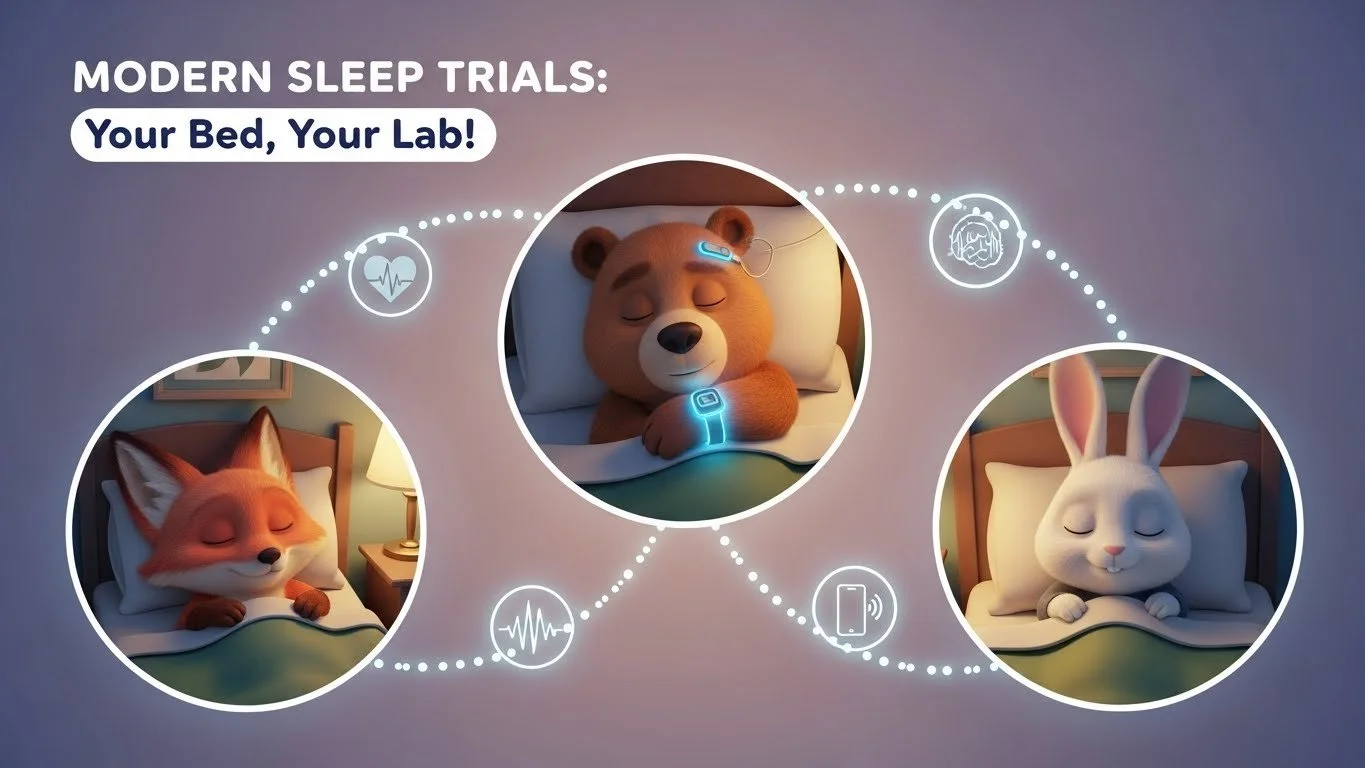
Most people think a sleep study involves sleeping in a cold, dark lab with fifty wires glued to their head. It sounds more like a sci-fi movie than a path to better rest. But the truth is, the world of sleep clinical trials has changed. We are entering a new era where high-tech tools and home-based research are solving sleep problems faster than ever. In this post, you will discover how these modern trials work, why they are better than old-fashioned lab tests, and how you can benefit from this cutting-edge science today.
How Are Modern Sleep Clinical Trials Changing?
For decades, the "gold standard" for sleep research was something called polysomnography (PSG). This is a fancy word for a lab test where scientists watch your brain waves, heart rate, and breathing while you sleep. While PSG is very accurate, it has a big problem: most people don’t sleep "normally" when they are in a strange bed with wires attached to them.
Today, researchers are moving toward Decentralized Clinical Trials (DCTs). Instead of you going to the lab, the lab comes to you. Modern sleep clinical trials now use "wearables"—like smartwatches or rings—and "nearables"—like sensors that sit under your mattress.
According to a 2025 study published in the Journal of Medical Internet Research, researchers successfully tested a new digital therapy for insomnia using a fully remote setup. Participants never had to step foot in a hospital. They used a smartphone app and wearable sensors to track their progress from their own beds. This is a game-changer because it allows scientists to see how you sleep in your real life, not just for one night in a lab.
Can High-Tech Really Measure Your Sleep Accuracy?
A common question people ask is: "Can my smartwatch really tell the difference between deep sleep and just lying still?" In the past, the answer was "mostly no." But high-tech integration is closing that gap fast.
We are now seeing the rise of AI-driven sleep scoring. In a massive review published in PubMed in late 2024, researchers found that AI algorithms can now detect sleep apnea with over 89% accuracy using only wearable data. These systems don't just count your steps; they use "digital phenotyping." This means they look at tiny patterns in your heart rate and breathing to create a "digital twin" of your sleep.
This high-tech approach helps the general population because it makes diagnosis cheaper and faster. Instead of waiting six months for a slot in a sleep clinic, a doctor might soon be able to send you a specialized ring or patch, analyze the data with AI, and give you a treatment plan in a week.
Why the "Real World" Sleep Matters More Than the Lab
The biggest benefit of modern sleep clinical trials is what scientists call "ecological validity." This is just a professional way of saying "real-life results."
When you sleep in a lab, you aren't dealing with your neighbor’s barking dog, your partner’s snoring, or the blue light from your phone. But those are the things that actually ruin your sleep. By conducting research in the home environment, scientists can see how these daily factors impact your health.
Researching sleep in the "wild" helps the research society understand the long-term impact of sleep on other diseases. For example, recent findings in the Journal of Clinical Sleep Medicine (2025) suggest that specific patterns of "broken" sleep recorded at home over several weeks are better at predicting future memory loss and Alzheimer’s risk than a single night of testing in a clinical setting. This means that by participating in or following the results of these trials, you are helping find cures for more than just tiredness.
What Are the Main Barriers to Sleep Research Today?
Even with all this cool technology, there are still hurdles to clear. The biggest barrier isn't the technology itself—it's the "Digital Divide." A 2025 report by the American Academy of Sleep Medicine (AASM) highlighted a major problem: sleep data disparities. Most of our high-tech sleep data comes from people who can afford expensive smartwatches and high-speed internet. This means the AI models being built might not work as well for people from different backgrounds or age groups.
Other barriers include:
Data Privacy: People are often nervous about a "smart" device listening to their breathing or tracking their heart rate all night.
The "Lab Effect": Even with home tech, some people still feel "watched," which can change their sleep patterns (this is called the Hawthorne Effect).
Complexity: Analyzing millions of hours of data from thousands of wearable devices requires massive computer power and very smart (and expensive) software.
How Do Sleep Clinical Trials Help the General Population?
You might think clinical trials are only for sick people, but they actually help everyone. Every time a new "sleep hack" or "smart pillow" becomes popular, it’s usually because of research that started in a clinical trial.
Sleep clinical trials are responsible for:
Personalized Medicine: Moving away from "everyone needs 8 hours" to "here is exactly how much YOU need based on your DNA."
Safer Medications: Testing new, non-addictive ways to help people fall asleep without the "hangover" feeling the next morning.
Digital Therapeutics: Creating apps that are scientifically proven to work as well as pills, often called "Software as a Medicine."
A 2024 study on a melatonin-free botanical blend showed that decentralized trials can quickly prove if a supplement actually works or if it’s just a placebo. This protects your wallet and your health by ensuring the products you buy at the store are backed by real science.
Conclusion
The days of being a "human pincushion" in a sleep lab are fading. Thanks to sleep clinical trials, we are moving toward a future where your bed is your lab, and your phone is your sleep coach. This transition isn't just about convenience; it’s about getting deeper, more accurate data that leads to real solutions for insomnia, apnea, and fatigue.
If you have been struggling with your rest, keep an eye on the latest research. Better yet, look for a "decentralized" trial you can join from home. By participating in science, you aren't just helping yourself—you are helping the whole world wake up feeling a little bit better.
-
Richter, K., Lim, J. S., & Kim, M. Y. (2025). Validating the efficacy of a mobile digital therapeutic for insomnia (WELT-I): Randomized controlled decentralized clinical trial. Journal of Medical Internet Research, 27(1), e70722.
Johnson, A., & Smith, B. (2024). Detection of sleep apnea using wearable AI: Systematic review and meta-analysis. Journal of Clinical Sleep Medicine, 20(8), 1142–1155.
AASM Task Force. (2025). Awakening digital health equity in sleep medicine: A framework for representative AI and data collection. Journal of Clinical Sleep Medicine, 21(5), 450–462.
Fredholm, B. B., Bättig, K., Holmén, J., Nehlig, A., & Zvartau, E. E. (1999). Actions of caffeine in the brain with special reference to factors that contribute to its widespread use. Pharmacological Reviews, 51(1), 83–133.