Why Understanding Sleep in Autism Sex Differences Changes Everything
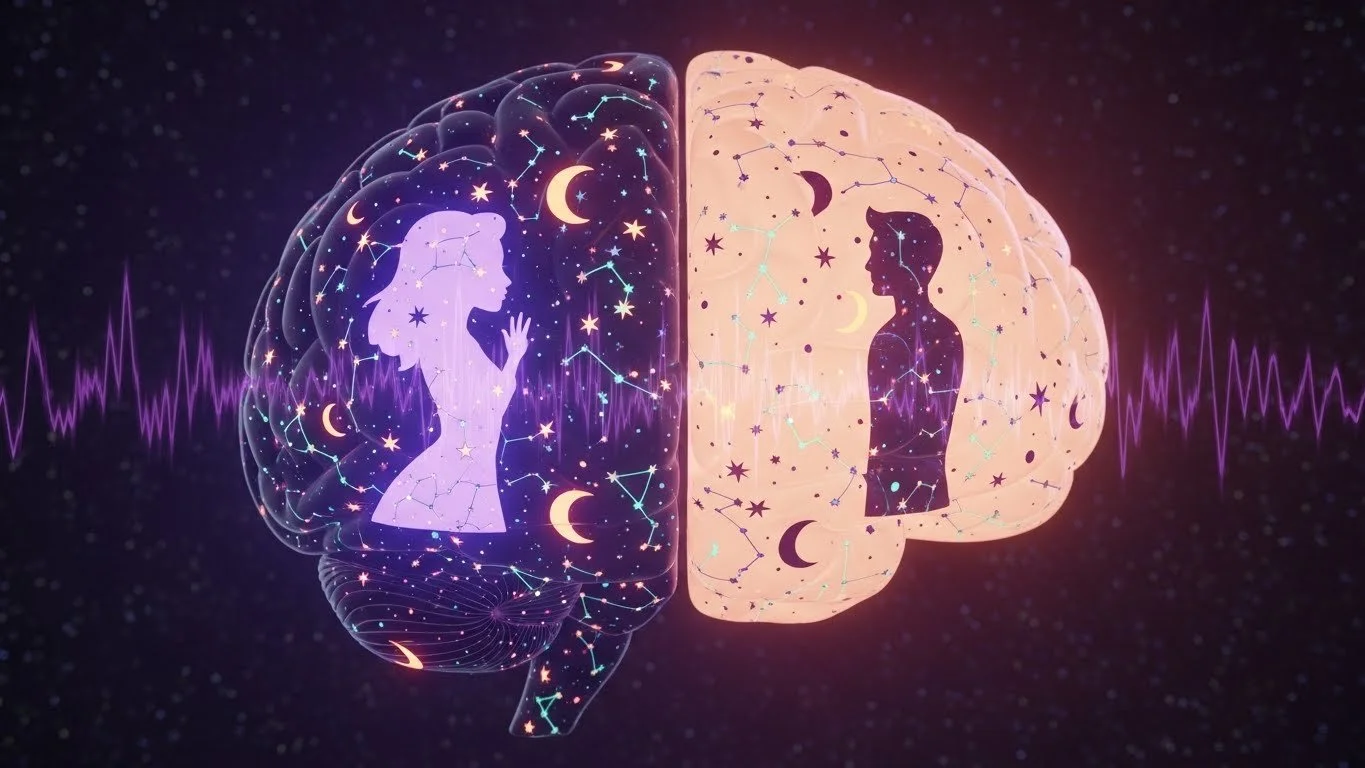
If you or a loved one is autistic, you know that the "off switch" for the brain often feels broken. While most people focus on social skills, the real battle happens at 2:00 AM. Sleep problems affect up to 80% of people on the spectrum, but new research shows that men and women face very different hurdles. In this post, you will discover why these differences exist and learn specific, sensory-based strategies to finally reclaim your rest.
What Does it Really Mean to Be on the Autism Spectrum?
Autism Spectrum Disorder (ASD) is much more than just a set of "behaviors." At its core, it is a different way of processing the world. The brain of an autistic person is often "hyper-connected." This means that the sensory system—sight, sound, touch, and even the feeling of one’s own heartbeat—can be turned up to a level that is overwhelming.
For many years, we thought of autism through a very narrow lens. It was described primarily as a "male" condition. We looked for specific signs like a deep interest in trains or repetitive hand-flapping. However, the "spectrum" is vast. It includes people with incredible intellectual gifts and those who need significant daily support. It includes people who are non-verbal and those who speak multiple languages.
The common thread is a unique neurobiology. The autistic brain processes social cues differently and often finds comfort in predictability and routine. When that routine is broken, or when the environment becomes too loud or bright, it triggers a "fight or flight" response. This constant state of high alert is the primary enemy of a good night’s sleep.
Why is the "4 to 1" Male-to-Female Ratio Changing?
For decades, the medical community reported that four men were diagnosed with autism for every one woman. This 4:1 sex difference has shaped everything we know about the condition. However, we are now realizing that this ratio might be more about our own bias than actual biology.
Autistic women and girls are often experts at "masking." Masking is a survival strategy where a neurodivergent person hides their traits to fit into a neurotypical world. A girl might force herself to make eye contact or script her conversations to "sound normal." While this helps her navigate social situations, it comes at a massive cost: total exhaustion.
By the time an autistic woman gets home, her "social battery" is not just empty; it’s in the negatives. This leads to a phenomenon called "autistic burnout." Because women are often diagnosed much later in life (sometimes not until their 30s or 40s), they spend years wondering why they feel so different and why their sleep is so much worse than their peers.
Is There a "Sleep Gap" Between Autistic Men and Women?
The short answer is yes—and it’s significant. Recent research has pulled back the curtain on sleep in autism sex differences, and the findings are startling. While roughly 66% of autistic males struggle with sleep, that number jumps to nearly 85% for autistic females (Estes et al., 2023).
This isn't just a small difference; it’s a major health gap. Autistic women are "doubly burdened." They face the general sleep challenges of being female (which often include higher rates of insomnia in the general population) combined with the specific sensory and neurological challenges of autism.
Research shows that girls on the spectrum tend to have:
Higher levels of bedtime resistance (struggling to actually get into bed).
Significantly more sleep anxiety.
Higher "wake time after sleep onset," meaning once they wake up in the night, they stay awake longer.
For men, sleep problems are often tied directly to externalizing behaviors or high levels of daytime anxiety. For women, the struggle is often more "internalized." They may lay perfectly still in the dark, but their minds are racing through every social interaction of the day, making sleep impossible.
How Do Sensory Differences Impact the Way We Sleep?
We often hear about "sleep hygiene"—don't drink coffee, keep the room dark, and stay off your phone. But for the neurodivergent brain, these tips are just the tip of the iceberg. The real issue is often sensory processing.
In the autistic brain, the "thalamus"—the part of the brain that acts as a gatekeeper for sensory information—works differently. For a neurotypical person, the brain "mutes" the sound of a ticking clock or the feeling of a clothing tag. For an autistic person, that gate stays open.
Sex differences play a role here too. Research suggests that autistic females may experience higher levels of "sensory over-responsivity." This means that the environment doesn't just feel "annoying"; it feels like an actual physical assault on the senses.
The Weight of the Blanket: What feels cozy to one person may feel suffocating to an autistic woman. Conversely, many find that they need deep pressure (like a weighted blanket) to signal to their nervous system that they are safe.
The Sound of Silence: Total silence can actually be "loud" for some, as it makes internal sounds (like breathing or digestion) more prominent.
Can Physical Activity Close the Sleep Quality Gap?
One of the most interesting recent discoveries in sleep in autism sex differences involves the relationship between movement and rest. A 2024 study published in MDPI found that autistic girls often have lower levels of vigorous physical activity during the day compared to autistic boys.
This lacks-of-movement isn't just about fitness; it directly impacts "sleep efficiency." The study found that girls with ASD had lower sleep efficiency (the percentage of time spent actually sleeping while in bed) than boys. This suggests that for autistic women and girls, adding structured, sensory-friendly movement into the day isn't just a "health tip"—it's a biological requirement for sleep.
When we don't move our bodies enough, we don't build up "sleep pressure" fast enough. For someone who is already "wired" from social masking, this lack of physical fatigue means the brain stays in a high-arousal state all night long.
Why the Biological Clock Works Differently in ASD
Beyond behavior and environment, there is a deep biological reason for these sleep struggles: the circadian rhythm. Our bodies rely on a "master clock" in the brain that tells us when to be awake and when to sleep. This clock is regulated by hormones like melatonin (the sleep signal) and cortisol (the wake signal).
In people with autism, this clock is often "out of sync." Studies have shown that many autistic individuals produce lower levels of melatonin at night or release it much later than they should.
Interestingly, recent neurophysiology studies (such as those exploring EEG patterns) have found that sex affects the very architecture of sleep. Boys with ASD may show more "fragmented" sleep, while girls often show alterations in "sleep spindles"—the little bursts of brain activity that help us stay asleep and process memories. This means that even when an autistic woman is asleep, her brain might not be getting the restorative "deep" sleep it needs to recover from the day.
How Can We Support Neurodivergent Sleep Beyond "Hygiene"?
If standard advice like "avoid caffeine" hasn't worked for you, it's because your brain needs a different approach. We need to focus on regulating the nervous system rather than just "following rules."
1. The "Sensory Diet" for Evening
Instead of just turning off lights, create a sensory environment that actively lowers your heart rate. This might include:
Proprioceptive Input: Using a weighted lap pad or blanket to provide "grounding" pressure.
Auditory Masking: Using "brown noise" (which is deeper than white noise) to drown out unpredictable household sounds.
Temperature Regulation: Autistic individuals often have difficulty with "thermoregulation." A cool room is essential, but moisture-wicking pajamas can prevent the sensory "ick" of night sweats.
2. The "De-masking" Hour
Since many autistic women spend the day masking, they need a dedicated time to not be "on." This means an hour before bed where there are no social expectations, no "small talk," and no need to perform. This allows the cortisol levels to naturally drop.
3. Structured Movement
Based on the latest research, incorporating "heavy work" (like pushing a vacuum, carrying groceries, or resistance band exercises) can help girls and women with ASD build the physical fatigue necessary for deep sleep.
Conclusion
Sleep is not a luxury; for the autistic community, it is a vital tool for managing sensory overload and emotional regulation. By understanding the unique sleep in autism sex differences, we can stop blaming ourselves for "bad habits" and start working with our biology. Whether it's adjusting your sensory environment or adding more movement to your day, small, science-backed changes can lead to the rest you deserve.
-
Estes, A., Henderson, E. E., & Munson, J. (2023). Sleep problems in autism: Sex differences in the school‐age population. Journal of Child Psychology and Psychiatry.
Henderson, E. E., et al. (2023). Prevalence and characteristics of sleep disturbances in autistic women vs men. Sleep Medicine.
MDPI (2024). Sex Differences in Sleep and Physical Activity Patterns in Autism Spectrum Disorder. Journal of Clinical Medicine.