The Aging Sleep: Why Deep Sleep Quality Drops with Age
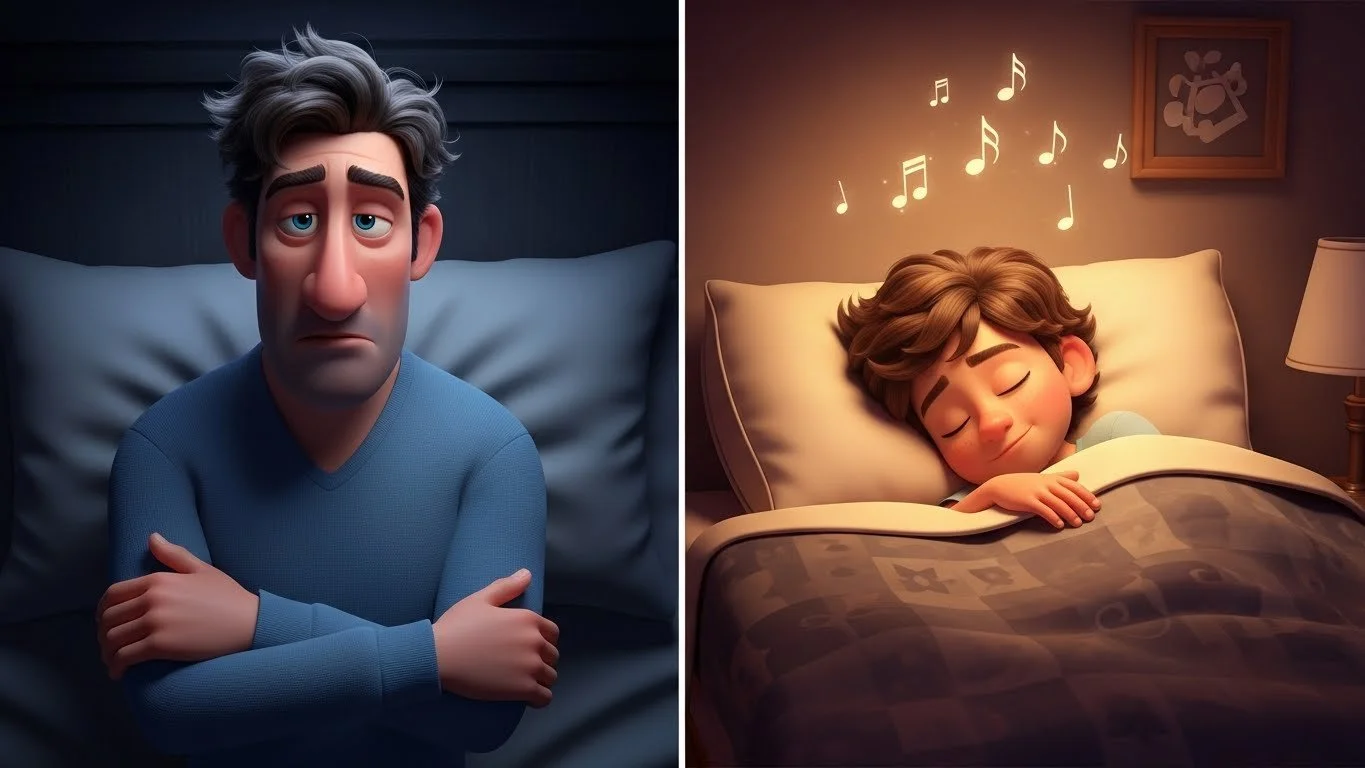
Do you wake up feeling like you barely slept, even after eight hours in bed? You aren't alone. As we age, our "Deep Sleep Quality" often takes a nosedive, leaving us foggy, forgetful, and fatigued. While most experts tell you to "stop drinking coffee" or "buy better curtains," those basic tips rarely solve the real biological problem. In this article, you will discover why your brain’s architecture changes after age 30 and learn advanced, research-proven methods—like sound-syncing and skin warming—to rebuild your deep sleep and protect your brain for years to come.
What is Deep Sleep Quality and Why is it the Brain’s "Car Wash"?
To understand how to fix your sleep, we first need to look at what happens when the lights go out. Sleep isn't just one long block of rest; it is a series of stages. The most important stage for your long-term health is Stage 3 Non-REM sleep, also known as Slow Wave Sleep (SWS). The name of SWS comes from the way your brain behaves during this time. Using an EEG (a device that tracks brain activity), scientists see large, slow, and highly synchronized electrical waves. These are called "Delta waves."
On the other hand, during REM (Rapid Eye Movement) sleep, your brain activity looks almost identical to when you are awake. Your eyes move rapidly, and your heart rate increases, but your body is temporarily paralyzed so you don't act out your dreams. REM is where you process emotions, solve complex problems, and solidify new memories.
Think of your brain activity during the day like a busy highway with cars (signals) zooming in every direction at high speeds. During deep sleep, the spaces between your brain cells expand, allowing cerebrospinal fluid to rush in and flush out toxic waste products like amyloid-beta. During SWS, the highway clears out, and the brain begins a slow, rhythmic "pulse." This slow pulsing is the hallmark of Deep Sleep Quality. It is during this specific stage that your heart rate drops, your breathing slows, and your muscles become completely relaxed. Unlike earlier stages of sleep, it is very difficult to wake someone up during SWS. If you are jolted awake from this stage, you will likely feel "sleep inertia"—that heavy, disoriented grogginess that can last for 30 minutes or more. If you don't get enough "Deep Sleep Quality," these toxins can build up, which researchers have linked to memory loss and cognitive decline.
Beyond cleaning, deep sleep is when your body repairs tissue, builds bone and muscle, and strengthens your immune system. It is the ultimate physical and mental "reset" button. Unfortunately, for many of us, that button becomes harder to press as the years go by.
Why is Deep Sleep the Ultimate Restorative Powerhouse?
Many people think sleep is just "downtime," but during Deep Sleep, your body is actually working harder than ever. Deep sleep is restorative because it handles the "heavy lifting" of physical and neurological maintenance.
First, let’s look at the Glymphatic System. As mentioned above, during SWS, the space between your brain cells increases by up to 60%. This allows cerebrospinal fluid to rush in and flush out toxic waste products, such as amyloid-beta—the protein linked to Alzheimer’s disease. Without high Deep Sleep Quality, these "trash" proteins build up, leading to "brain fog" and long-term cognitive decline.
Second, Deep Sleep is the primary time for Growth Hormone (GH) secretion. In adults, GH isn't about getting taller; it’s about repairing tissues, building muscle, and strengthening bones. This is why athletes emphasize sleep for recovery. If you cut your deep sleep short, your body literally cannot repair the "wear and tear" from your daily life. Finally, this stage is where your immune system "files" information about pathogens, helping you fight off infections more effectively.
The Aging Threshold: When Does Deep Sleep Quality Begin to Decline?
Many people believe that sleep issues only start in our 60s or 70s. However, research shows that the decline begins much earlier. Recent data suggests a "linear decline" in deep sleep that starts as early as our late 20s or early 30s.
According to a 2023 study published in the Journal of Clinical Sleep Medicine, the percentage of time we spend in deep, slow-wave sleep drops by about 2% every decade until we reach age 60. This means by the time you are 45, you have already lost a significant portion of your most restorative rest compared to your teenage years.
Why does this happen? It isn't just "stress." The biological hardware of the brain actually changes:
Brain Atrophy: The area of the brain responsible for generating deep slow waves—the medial prefrontal cortex—tends to thin as we age.
The SCN Weakens: Your internal master clock, the Suprachiasmatic Nucleus (SCN), begins to lose its "signal strength." This causes your body to get tired earlier and wake up earlier (a process called phase advance), making it harder to stay in deep sleep throughout the night.
Hormonal Shifts: Our bodies produce less melatonin and growth hormone as we age, both of which are critical for staying in the deep stages of sleep.
Beyond Hygiene: Can Acoustic Stimulation Restore Your Deep Sleep Quality?
If you’ve already tried the usual advice—like keeping your room dark and avoiding screens—and you’re still tired, it’s time to look at advanced interventions. One of the most exciting breakthroughs in circadian medicine is Phase-Locked Acoustic Stimulation (PLAS).
This isn't just "white noise." Research from 2023 and 2024 has shown that playing specific pulses of "pink noise" (sounds like falling rain or rustling leaves) that are perfectly timed to your brain waves can actually "boost" the height of your slow waves.
In a pilot study published by Van den Bulcke et al. (2023), researchers used specialized headbands to deliver these sounds to adults with early memory issues. They found that the participants nearly doubled their time spent in deep sleep on nights when the acoustic stimulation was used. The sounds act like a rhythmic "nudge," helping the brain stay in the deep, slow-wave state longer than it would on its own. This technology is now moving from the lab into high-end consumer wearables, offering a way to "biohack" your brain waves back to a more youthful pattern.
The "Skin Warming" Secret: A New Way to Hack Your Circadian Rhythm
We are often told to "sleep in a cool room," but the science of temperature is more nuanced than that. While your core body temperature needs to drop to trigger sleep, your skin temperature (specifically your hands and feet) needs to rise.
This is known as the "distal-to-proximal temperature gradient." When your hands and feet are warm, your blood vessels dilate, allowing heat to escape your core. A study highlighted in Frontiers in Sleep (2024) and MDPI (2025) suggests that using "smart" thermal regulation can significantly improve "Deep Sleep Quality."
Instead of just keeping the room cold, the secret is localized warming. Using a warm foot bath or a "smart mattress" that warms your feet while keeping your head cool can "trick" your brain into a deep sleep state. Newer mattress technologies can even adjust the temperature in real-time. For example, they might warm the bed to help you fall asleep, then slowly cool the bed during the night to keep you in Stage 3 sleep, and finally warm it up again to help you wake up naturally. This dynamic shift mimics the body's natural 24-hour rhythm, which often becomes "flat" or weak as we age.
Conclusion
Aging is inevitable, but losing your "Deep Sleep Quality" doesn't have to be. While the traditional "hygiene" tips are a good foundation, they often aren't enough to combat the biological shifts that happen after age 40. By understanding that your brain needs specific signals—like rhythmic sound pulses and precise temperature shifts—you can reclaim the restorative rest of your youth.
-
Van den Bulcke, L., Peeters, A-M., Heremans, E., et al. (2023). Acoustic stimulation as a promising technique to enhance slow-wave sleep in Alzheimer's disease: results of a pilot study. Journal of Clinical Sleep Medicine, 19(12), 2107–2112.
Wunderlin, M., et al. (2024). Multi-night acoustic stimulation is associated with better sleep, amyloid dynamics, and memory in older adults with cognitive impairment. Frontiers in Sleep, 3, 11493878.
Ames, S., et al. (2025). Under the Covers: The Effect of a Temperature-Controlled Mattress Cover on Sleep and Perceptual Measures in Healthy Adults. MDPI Sleep Technologies, 7(4), 18-34.