The Sleep Apnea Survival Guide: the Risks, Gender Differences, and Modern Solutions
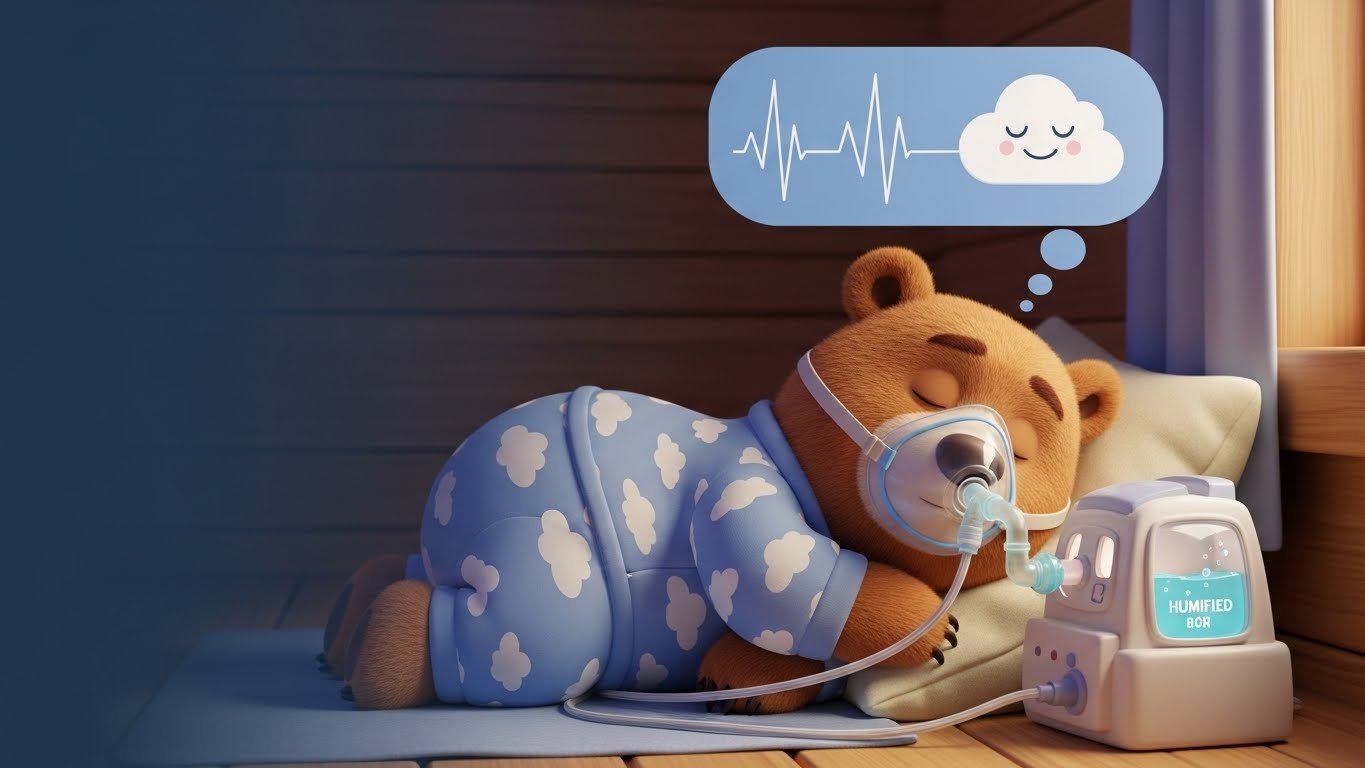
Do you wake up feeling like you’ve been hit by a truck, even after eight hours in bed? You might think you’re just "not a morning person," but your body could be fighting for its life while you sleep. Sleep apnea is a serious condition where your breathing repeatedly stops and starts, starving your brain of oxygen. In this guide, you will learn how to identify the signs of sleep apnea that go beyond simple snoring, why your age and gender change your risk, and the cutting-edge ways to finally get the rest you deserve.
What Exactly Is Sleep Apnea and Why Does It Happen?
To understand sleep apnea, imagine your airway as a flexible straw. When you sleep, the muscles in your throat relax. For most people, the straw stays open. But for someone with Obstructive Sleep Apnea (OSA), that straw collapses or gets blocked by the tongue or soft tissue.
When your airway closes, your blood oxygen levels drop. Your brain panics and sends a jolt of adrenaline to wake you up just enough to gasp for air. You might not even remember these "micro-awakenings," but they can happen 30 or 40 times every single hour. This constant "fight or flight" mode puts a massive strain on your heart and prevents you from ever reaching the deep, restorative stages of sleep.
How Do the Signs of Sleep Apnea Differ Between Men and Women?
For a long time, doctors thought sleep apnea was a "man’s disease." We now know that was a huge mistake. While men are diagnosed more often, women are frequently misdiagnosed because their symptoms look different.
The "Classic" Male Presentation: Men usually show the textbook signs of sleep apnea: loud, "chainsaw" snoring, gasping for air, and observed pauses in breathing. Because these are easy to spot, men are often sent to sleep labs quickly.
The "Silent" Female Presentation: Research published in the Journal of Clinical Sleep Medicine highlights that women often report "atypical" symptoms. Instead of snoring, a woman might experience:
Chronic insomnia or trouble falling asleep.
Morning headaches and extreme daytime fatigue.
Mood changes, such as anxiety or depression.
Restless Leg Syndrome.
Because these symptoms overlap with other conditions, women are often told they are "just stressed" or "going through menopause." It is vital to recognize that if you are a woman feeling exhausted despite sleeping, you should ask your doctor about a sleep study, even if you don’t snore loudly.
Why Does Your Age Increase the Risk of Breathing Problems?
As we get older, our bodies change in ways that make it harder to keep the airway open. Age is one of the most significant risk factors for developing sleep apnea, but the reasons why are more complex than just "getting older."
According to a study in Nature Communications (2022), the "collapsibility" of the upper airway increases as we age. This happens because the muscles that hold our throat open lose their tone, much like the muscles in our arms or legs might.
Additionally, something called fluid shift becomes a major player as we age. During the day, gravity causes fluid to pool in our legs (especially if we have high blood pressure or sit a lot). When we lie down at night, that fluid moves back up toward the neck. In older adults, this extra fluid can put physical pressure on the airway, making it much more likely to collapse. This explains why people who didn't have sleep apnea in their 30s might suddenly develop it in their 60s.
Why Is Sleep Apnea More Than Just Loud Snoring?
Many people ignore the signs of sleep apnea because they think it’s just an annoying habit. In reality, snoring is the sound of a partially blocked airway—it is the smoke, but the apnea is the fire.
When you stop breathing, your body enters a state of "intermittent hypoxia." This means your oxygen levels are riding a roller coaster all night long. A 2021 study in the journal Sleep found that this repeated loss of oxygen causes systemic inflammation. This inflammation doesn't just stay in your lungs; it travels to your heart, your blood vessels, and your brain.
This is why untreated sleep apnea is directly linked to:
Type 2 Diabetes: The stress of not breathing causes your body to release glucose, making you more insulin resistant.
Heart Disease: The sudden drops in oxygen increase blood pressure and strain the cardiovascular system.
Cognitive Decline: New research suggests that the lack of deep sleep prevents the brain from "washing away" toxins, potentially increasing the risk of Alzheimer’s disease.
Can Your Body Type Affect Your Signs of Sleep Apnea?
While weight is a known factor, it isn't the only one. You can be thin and still have severe sleep apnea. This is often due to your "craniofacial structure"—basically, how your face and jaw are built.
If you have a recessed chin (a "weak" jawline) or a large tongue, there is simply less room in your mouth. When you lie on your back, gravity pulls those structures down, blocking the airway. Doctors also look at the "Mallampati score," which is a way of measuring how much space is visible in the back of your throat. If you have a "Grade 4" throat, your airway is naturally narrow, regardless of your weight.
What Are the Modern Solutions Beyond the CPAP Machine?
Most people dread a sleep apnea diagnosis because they think they will be forced to wear a bulky "Darth Vader" mask (the CPAP machine). While CPAP is still the gold standard, modern medicine has created incredible alternatives for those who can't tolerate it.
1. Oral Appliance Therapy (OAT): This is a custom-fit device, similar to a mouthguard, that you wear only at night. It works by gently pushing your lower jaw forward. This small shift keeps the tissue at the back of your throat from collapsing. It is quiet, portable, and much easier for many people to use consistently.
2. Hypoglossal Nerve Stimulation: Think of this as a "pacemaker for your tongue." A small device is surgically implanted under the skin of your chest. When it senses you are breathing, it sends a tiny electrical pulse to the nerve that controls your tongue. This causes the tongue to move forward, keeping the airway wide open.
3. Positional Therapy: For some, the signs of sleep apnea only appear when sleeping on their back. High-tech "buzzing" devices can be worn around the neck or waist. When the device senses you have rolled onto your back, it gently vibrates until you shift to your side, keeping your airway clear without waking you up.
If you recognize yourself in these descriptions, the "what now" is clear: you need a professional evaluation. You don't necessarily have to go to a hospital for an overnight stay anymore. Many doctors now offer Home Sleep Tests (HST). You wear a small sensor on your finger and a belt around your chest in the comfort of your own bed, and the data is sent to a sleep specialist for review.
Don't wait for a "major" health scare to take action. Fixing your sleep isn't just about stopping the snoring; it’s about giving your heart a break, your brain a chance to clean itself, and your body the energy it needs to actually enjoy your life.
Conclusion
Sleep apnea is a hidden epidemic that affects millions, yet remains vastly underdiagnosed, especially in women and older adults. By recognizing that the signs of sleep apnea are often subtle—ranging from morning headaches to simple daytime brain fog—you can take the first step toward a longer, healthier life. You deserve to wake up feeling refreshed and alive. Contact a sleep specialist today and take the first step toward reclaiming your nights and your health.
-
Deng, F., Bin, Y. S., & Marshall, N. S. (2021). The prevalence of obstructive sleep apnea and its association with systemic inflammation: A cross-sectional study. Sleep, 44(8), zsab042.
Malhotra, A., Mesarwi, O., & Pepin, J. L. (2022). Age-related changes in the upper airway: A study of pharyngeal collapsibility and fluid shifts in older adults. Nature Communications, 13(1), 1150–1162.
Wimms, A., Woehrle, H., Kuckert, S., Young, T., & Somers, V. K. (2020). Women and sleep apnea: A review of gender-specific symptoms and the risk of misdiagnosis in clinical practice. Journal of Clinical Sleep Medicine, 16(5), 789–795.