Protecting Sleep Protects Your Sperm and Testosterone
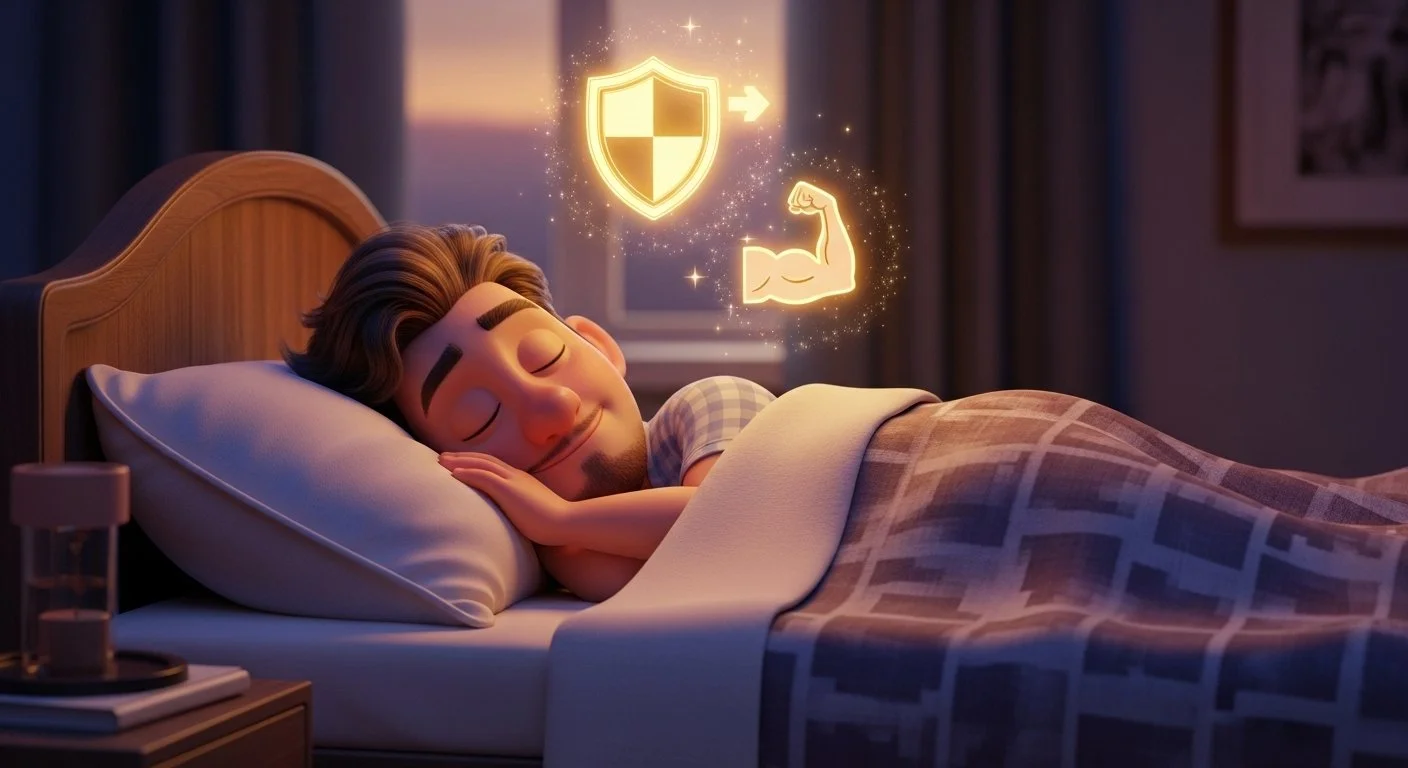
Have you ever thought about that the decline in your (or your partner’s) sperm counts may be directly tied to our increasingly "circadian-disrupted" lifestyle? When you browse apps or internet on your phone or tablet late at night, or spend your work week sleep-deprived and try to "catch up" on weekends, you are actually putting your reproductive system into a state of emergency.
Sound serious? Let’s dive more about the underlying science behind the reproductive crisis.
Circadian Disruption is Sabotaging Your Male Reproductive System
When we talk about male fertility, we often focus on diet, exercise, or avoiding tight clothing. However, the most sophisticated laboratory in your body—the one responsible for producing millions of sperm cells and the testosterone that fuels your drive—is regulated by circadian clocks. Recent research has revealed that the testes are not just passive organs; they have their own "local" clocks. These clocks are controlled by specific genes known as CLOCK and BMAL1.
When you stay up late under artificial blue light, you aren't just tricking your brain into thinking it’s daytime; you are desynchronizing the very genes that manage sperm maturation. This "circadian misalignment" causes a breakdown in the communication between your brain and your reproductive system, leading to lower sperm concentration and reduced motility (the ability of sperm to swim effectively).
In addition, our core body temperature follows a circadian rhythm. During a normal night of sleep, your core body temperature naturally drops to its lowest point. This systemic cooling is vital for the "thermal environment" of the testes. However, when we stay up late or have irregular sleep, we disrupt this thermal cycle. Effectively, a lack of sleep keeps your body "running hot." This subtle increase in nocturnal temperature can be enough to disrupt the delicate process of sperm production, leading to lower-quality cells that are less likely to result in a healthy pregnancy.
Furthermore, this circadian disruption extends beyond the health of the individual sperm cell and into the very information it carries. Emerging research in epigenetics suggests that the 'local' clocks in the testes are responsible for properly 'tagging' the DNA during sperm development. When your rhythm is fractured, these epigenetic markers—which act like a biological instruction manual for the next generation—can be miswritten. This means that sleep deprivation doesn't just lower your numbers; it can potentially alter the metabolic and stress-response blueprints you pass down, impacting the health trajectory of your future children before they are even conceived.
The Midnight Shield: Melatonin’s Role in Sperm Defense
Melatonin is far more than just a chemical 'sleep signal'; it is one of the most potent endogenous antioxidants and free-radical scavengers in the human body. While most people recognize it for its role in timing the sleep-wake cycle, melatonin’s reach extends directly into the reproductive system, where it serves as an essential protector for the male 'germline.'
Because the process of producing millions of sperm cells requires high levels of metabolic energy, it naturally generates Reactive Oxygen Species (ROS)—unstable molecules that can damage cellular structures. Melatonin easily crosses the blood-testis barrier to act as a primary scavenger, neutralizing these free radicals before they can cause 'biological rust.'
Specifically, research shows that melatonin provides a dual-layer of protection:
Preserving the Factory Workers: It protects Leydig cells (the primary site of testosterone synthesis) and Sertoli cells (the 'nurse cells' that physically support and nourish developing sperm) from oxidative stress-induced apoptosis (cell death).
Defending the Blueprint: It prevents oxidative DNA damage. Sperm cells are uniquely vulnerable to damage because they lack the robust DNA-repair mechanisms found in other body cells.
When your circadian clocks are disrupted—whether through late-night blue light exposure or chronic sleep restriction—your peak nocturnal melatonin surge is blunted. This loss of the 'melatonin shield' leaves the testes vulnerable to systemic oxidative stress. The result is a significant increase in sperm DNA fragmentation. This isn't just a matter of lower counts; fragmented DNA is a leading contributor to male-factor infertility, poor embryo development, and an increased risk of recurrent pregnancy loss
Why Your Testosterone Depends on Sleep Architecture
While we often think of testosterone as a steady baseline, its production is actually a highly coordinated rhythmic event dictated by the architecture of your sleep. Research indicates that testosterone levels begin to rise upon falling asleep, peaking during the first bouts of REM (Rapid Eye Movement) and the transition into deep, slow-wave sleep.
This surge is governed by the Hypothalamic-Pituitary-Gonadal (HPG) axis. During consolidated sleep, the hypothalamus releases rhythmic, high-amplitude pulses of Gonadotropin-Releasing Hormone (GnRH). This chemical signal travels to the pituitary gland, which then releases Luteinizing Hormone (LH)—the primary messenger that instructs the Leydig cells in your testes to synthesize testosterone.
When the sleep is fragmented—whether due to apnea, stress, or lifestyle choices—it is 'cutting the wire' on this communication line. Each time you wake up, the HPG axis is interrupted, causing the amplitude of these hormonal pulses to dampen. The consequences are rapid and measurable: studies have shown that just one week of restricted sleep (five hours per night) can plummet a healthy young man's testosterone levels by 10% to 15%. To put that in perspective, testosterone naturally declines by about 1% to 2% per year. In other words, a single week of poor sleep is like aging a man’s hormonal profile by 10 to 15 years.
This is far more than a matter of mood or libido. Testosterone is the mandatory 'fuel' for spermatogenesis. It maintains the specialized environment within the seminiferous tubules where sperm are born. Without this robust nocturnal signal, the 'Sperm Factory' lacks the hormonal concentration required to successfully mature millions of cells. Chronic sleep fragmentation doesn't just lower your numbers; it creates a state of functional secondary hypogonadism (low testosterone) that can stall the entire production line.
Conclusion
The link between sleep and male reproduction is much deeper than simple life style. It is a complex, molecular dance involving temperature regulation, antioxidant protection, and rhythmic hormonal pulses. By viewing sleep as a critical phase of reproductive maintenance, men can take a proactive role in their fertility. In a culture that never stops, the most impactful thing you can do for your hormonal health and your future children is to give your body the permission to rest.
-
Mazzilli, R., Defeudis, G., Olana, S., & Isidori, A. M. (2021). The impact of sleep disorders on male fertility: A systematic review. Journal of Clinical Medicine, 10(4), 854.
Reiter, R. J., Sharma, R., Ma, Q., Rosales-Corral, S., & Acuna-Castroviejo, D. (2020). Melatonin and its role in protecting the male germline from oxidative stress. Antioxidants, 9(4), 314.