Magic Lights: How Light Controls Your Sleep, Mood, and Metabolism
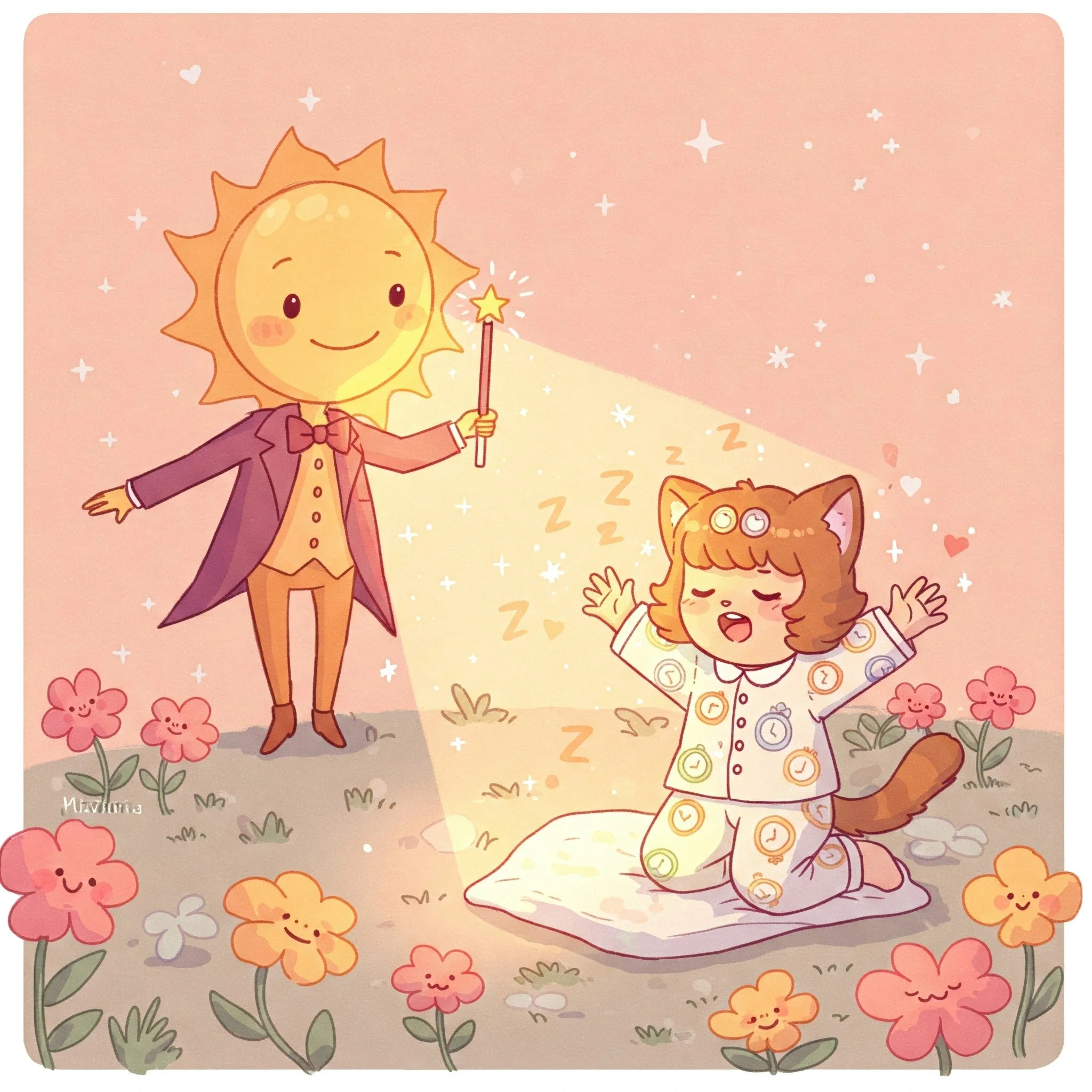
We rarely think about it, but the simple flick of a light switch holds a surprising amount of power over our lives. Light is more than just illumination; it's the conductor of our internal orchestra, the crucial force that keeps our body clock—our circadian rhythm—synchronized with the 24-hour cycle of the world. This ubiquitous conductor doesn't just let us see; it profoundly influences our sleep, mood, metabolism, and even our immune system.
Every morning, the moment sunlight hits our eyes, our brain registers a critical time signal. This signal, particularly the blue wavelength found in daylight, travels to the command center of our body clock: the suprachiasmatic nucleus (SCN). The SCN processes this information and, like a master controller, adjusts the timing of nearly every other biological system in your body.
The most potent way light affects us is by interfering with this natural rhythm, especially when we expose ourselves to it late at night. There is overwhelming evidence that light exposure in the evening delays the body clock, essentially forcing the hands of your internal timepiece backward. This is why you constantly see advice to put down the phone or tablet before bed.
Life in Shifts: The Clock-Warping Challenge
In the modern world, avoiding light at night is nearly impossible. LED screens, bright indoor lamps, and streetlights keep our nights as bright as day.
While most people at least get a chance to sleep in the dark for 4–6 hours, imagine a life where you are bathed in brightness for almost 24 hours a day. This is the reality for shift workers—the nurses, factory operators, and night-time drivers who keep the world running while we sleep.
If you work the night shift, you might be accustomed to sleeping during the day and working under bright lights at night. But your body clock is not so easily fooled. The strong light exposure at night tells your body it's daytime, leading to difficulty falling asleep later. Then, your daytime sleep is constantly interrupted by sunlight, resulting in poor, shallow rest.
This long-term disruption can lead to chronic health issues. A 2021 study in Scientific Reports on shift workers found that nocturnal light exposure not only disrupts the body clock but also impacts insulin sensitivity, increasing the risk of diabetes. Furthermore, research in 2023 from Occupational & Environmental Medicine indicated that shift workers with light-related clock misalignment were 30% more likely to experience gastrointestinal problems and mood disturbances than the general population.
A Ray of Hope: Light Therapy for Shift Workers
If light can mess up the body clock, can it also be used to fix it? Absolutely!
Light Therapy uses specific wavelengths and intensities of light to help the body recalibrate its schedule. For shift workers, this can feel like hitting a "reset button" on their circadian rhythm.
A 2023 study in Psychiatry Research showed that a daily 30-minute exposure to 10,000 lux (a measure of light intensity) of bright light in the morning significantly improved shift workers' sleep quality and emotional stability, a 40% improvement over a dim-light control group.
Another key example, published in the Journal of Affective Disorders in 2020, found that light therapy helped night shift workers rapidly adjust to their altered schedule. Participants used a light box immediately after their shift to simulate sunrise, allowing their body clocks to adapt to the new sleep-wake cycle in just three days, shifting their bedtime earlier by about two hours. This is a huge win for those who frequently rotate shifts.
Simple Light Strategies for a Better Shift
Beyond clinical light therapy, shift workers can adopt simple strategies based on circadian principles:
Manage Light While Working: During your night shift, try to use warmer-toned lights and avoid overly bright white light, as warm light contains less of the disruptive blue wavelength.
Create Consistency: Even on days off, try to maintain a sleep-wake schedule that is similar to your working days to avoid "social jet lag."
Soak Up Daytime Sun: On your work days, try to spend time outdoors during the day to strengthen your body clock's stability and reduce the cumulative fatigue of long-term shifts.
As light therapy technology advances, we might see more portable devices, like smart glasses or wearable light sources, making it easier for shift workers to adjust their schedules on the fly. NASA is even exploring how light can help astronauts adapt to the sunless environments of space—a technology that will surely benefit us night owls here on Earth.
Illuminating Your Mood
Light's influence on the body clock also has a direct effect on our emotional well-being.
Research, like that by Lam and colleagues in the Journal of Affective Disorders (2020), has shown that ample sunlight exposure boosts serotonin levels—a key "happy hormone"—which stabilizes mood. Conversely, people who consistently lack natural light exposure have a significantly higher risk of depression and anxiety.
This is particularly true for those with Seasonal Affective Disorder (SAD), a form of depression common during winter when daylight hours are short. Studies, such as one by Pjrek et al. (2020), found that SAD patients' body clocks become disordered when light is insufficient, leading to low mood, lethargy, and increased appetite. Light truly acts as a natural mood enhancer; without it, our spirits can dim.
The same principles of light therapy used for sleep can also lift your spirits:
A 2023 study in Psychiatry Research found that a daily 30-minute dose of 10,000 lux bright light in the morning significantly improved the mood and sleep of women with postpartum depression, showing a 46% better result than a dim-light control group.
For SAD, light therapy is exceptionally effective. A meta-analysis by Pjrek et al. (2020) concluded that using a light box for 30 minutes every morning resulted in 70% of SAD patients feeling significantly better within two weeks.
Light is not just for seeing; it’s a powerful, non-invasive tool for regulating our most fundamental biological processes. Understanding how this magic clock works—and learning how to use it—is key to a healthier, happier life.
-
Wright, K. P., et al. (2021). “Entrainment of the Human Circadian Clock to Light.” Journal of Biological Rhythms, 36(4), 326-338.
Chellappa, S. L., et al. (2023). “Shift Work and Health: The Role of Light Exposure.” Occupational & Environmental Medicine, 80(5), 298-305.
Zhang, J., et al. (2023). “Efficacy of Bright Light Therapy in Perinatal Depression.” Psychiatry Research, 343, 116291.
Pjrek, E., et al. (2020). “Bright Light Therapy for Seasonal Affective Disorder: A Meta-Analysis.” Journal of Affective Disorders, 89(1), 17-24.
Lam, R. W., et al. (2020). “Light Exposure and Mood: Mechanisms and Clinical Implications.” Journal of Affective Disorders, 276, 123-130.