The Toddler Sleep Paradox: "Wired but Tired" After Daycare
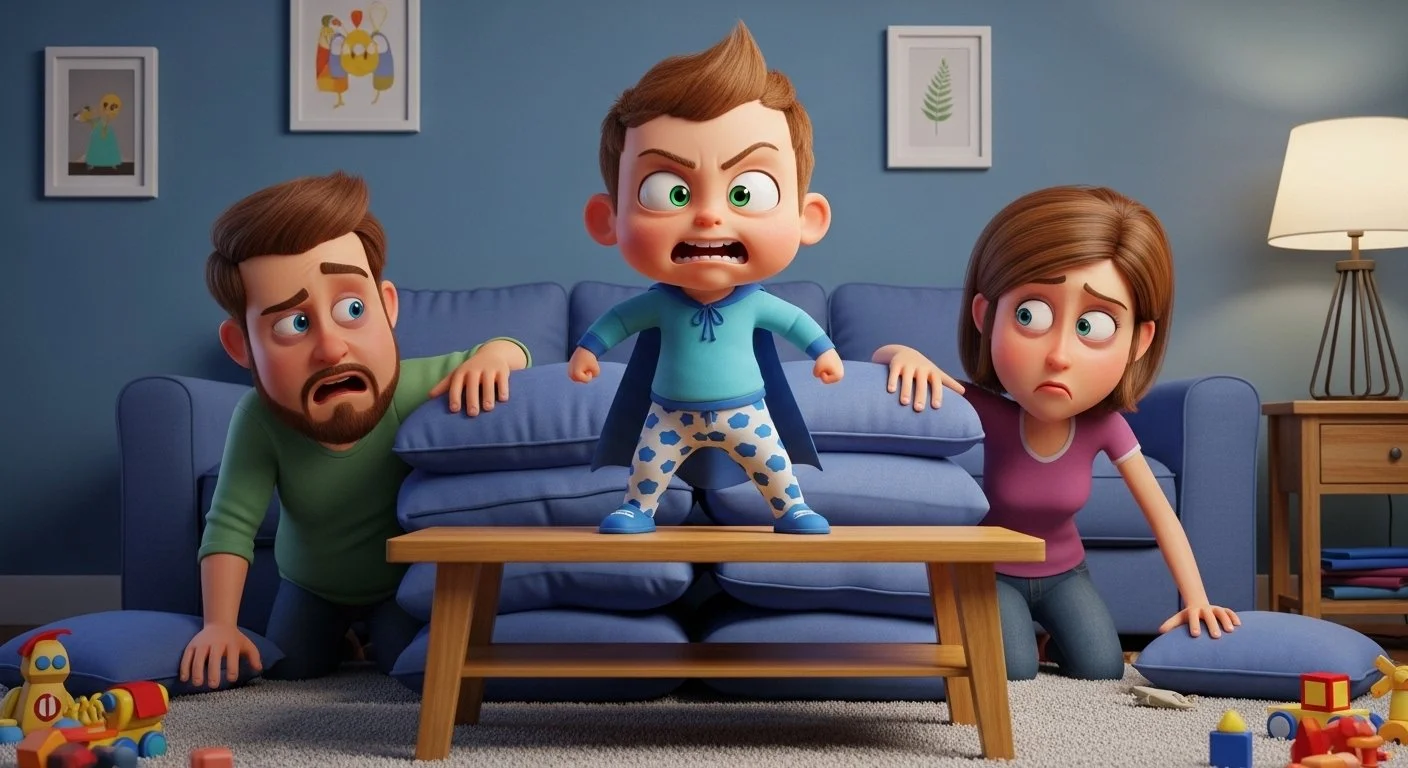
Parents are buying the best organic mattresses, high-tech white noise machines, and blackout curtains, all in a desperate bid to reach that "perfect" 12-hour sleep cycle for their kids. Yet, even with all the gear and a full day of running around at daycare, many toddlers are still bouncing off the walls at 9:00 PM.
If physical activity were the only requirement for sleep, your toddler should be out like a light. But sleep is a biological symphony, and sometimes, the "more activity" approach actually makes the music louder. If your child is "tired but wired," you are likely witnessing a clash between their internal clock and their external environment.
Why Daycare Workout Isn't Triggering the "Off" Switch
We often treat sleep like a battery. We think if we drain the battery to 0% through physical play, the toddler will naturally shut down. However, the human brain—especially a developing one—doesn't work like a smartphone.
The Sensory Hangover
One of the most overlooked "sleep killers" in a household is the sensory state of our children. Daycare is a sensory marathon. From 8:00 AM to 5:00 PM, your toddler is navigating loud voices, bright fluorescent lights, social negotiations, and constant transitions. Research recently published in journals focusing on pediatric development highlights a phenomenon known as After-School Restraint Collapse. During the day at daycare, toddlers are under immense pressure. They have to follow rules, share toys, navigate loud environments, and manage their emotions without their primary "safe person." To survive the day, they use every ounce of their emotional energy to stay composed. A 2023 study found that toddlers in high-stimulation environments had significantly higher afternoon cortisol (stress hormone) levels compared to those at home.
By the time they get home, many toddlers are sensory overloaded. When the brain is overwhelmed by input, it becomes hyper-vigilant. Even if the lights are dimmed at home, the brain is still "processing" the stimulations of the day. This creates a barrier to falling asleep.
The Biological Clock Shift
A common mistake in 2026's fast-paced parenting culture is the "Early Bedtime Myth." While early bedtimes are generally good, they can backfire if your child has a Circadian Phase Delay.
If your toddler’s biological clock has shifted later—perhaps due to high-intensity blue light from a tablet or other smart devices in the late afternoon—their body simply won't produce melatonin until later in the evening. If you try to put them to bed at 7:30 PM, but their "biological night" doesn't start until 8:30 PM, you will spend an hour in a power struggle. This struggle creates a negative association with the bed. Instead of a place of rest, the bed becomes a battlefield.
The Role of "Social Zeitgebers" in the Modern Home
The word Zeitgeber is German for "time-giver." While light is the strongest time-giver, social interactions are a close second. For a toddler, whose world is almost entirely defined by their relationship with their caregivers, these social cues can sometimes override the signals of a dark room.
One of the most common social zeitgebers is the "Re-entry Spike." Imagine this: Your toddler has been at daycare or with a sitter all day. Their internal clock is starting to wind down as the sun sets. Then, at 6:00 PM, you walk through the door. You’re happy to see them, you’re high-energy, and you might even be a little stressed from the commute.
To your toddler, your arrival is a massive "Wake Signal." The emotional intensity of reuniting with a primary caregiver triggers a surge of dopamine and oxytocin. While these are "happy" hormones, they are also highly stimulating. This social interaction effectively "resets" their internal timer, pushing their natural sleep window back by an hour or more.
Practical Solutions for the "Post-Daycare Melt"
To fix the sensory transition
Instead of jumping straight into a high-energy dinner or bath time, try a "Decompression Gap."
The 20-Minute Dim-Down: Lower the lights and turn off all background noise (no TV, no loud music) the moment you get home.
Proprioceptive Input: Heavy work like "animal crawls" or a firm "burrito wrap" in a blanket can help ground a toddler’s nervous system.
Low-Demand Connection: Spend 15 minutes just sitting on the floor with them, no questions asked. Let them lead the interaction.
The "Low-Blue" Sunset
Starting two hours before bed, switch your home to "amber mode." Use lamps with warm-toned bulbs rather than overhead LED lights. This mimics the natural transition of the sun and allows the toddler’s sensitive eyes to begin signaling melatonin production early.
The "Low-Energy Greeting"
We recommend the "Parallel Re-entry." Instead of a high-energy "I’m home!" greeting, try entering the house and immediately engaging in a low-stimulation activity, like sitting on the floor or helping with a quiet task. You want to signal to their biological clock that while you are present, the mode of the day is still "winding down."
The 15-Minute "Parental Reset"
In addition to the parents’ home returning, another "invisible" social zeitgeber is the caregiver’s own cortisol levels. Toddlers are biologically tuned to their parents' nervous systems—a process called co-regulation. If you are rushing to get them to bed because you have chores or work to finish, your "internal speed" acts as a social cue.
A study in Nature recently explored how "micro-stressors" in parents can be detected by children through subtle cues: voice pitch, pupil dilation, and skin temperature. If you are stressed, your toddler can sense it.
So before you start the bedtime routine, take 15 minutes for your own decompression. If you enter the routine with a lowered heart rate, your toddler’s "social clock" will mirror yours, signaling that it is safe to transition into the "rest and digest" phase.
"Cool Down" is a Secret Sleep Trigger
We often focus on light and noise, but thermoregulation is a massive, often overlooked driver of toddler sleep. To fall asleep, our core body temperature must drop by about 2 to 3 degrees Fahrenheit.
Toddlers who have been physically active all day often have a higher core temperature. A warm bath about 60-90 mins before bed actually helps this process—not because the warmth makes them sleepy, but because it draws the heat to the surface of the skin, causing the core temperature to plummet once they step out into a cooler room. The idea is to have blood vessels to dilate and move heat from your core to your hands and feet. This "thermal dump" is a biological trigger for the brain to start the transition into Stage 1 sleep.
Conclusion
True sleep health for your toddler isn't found in a catalog of high-tech gear. It’s found in the quiet moments of synchronization between your child’s biology and your family's rhythm. By understanding that daycare is a sensory marathon and that your own energy is a powerful "time-giver," you can stop fighting the bedtime battle. Sleep isn't a behavior to be forced; it is a natural state that we invite in by lowering the lights, dropping the temperature, and quieting the social noise. When we align these "clocks," the 9:00 PM "second wind" disappears, replaced by the restful, deep sleep your child—and you—truly need.
-
Besedovsky, L., Lange, T., & Haack, M. (2019). The sleep-immune crosstalk in health and disease. Physiological Reviews, 99(3), 1325–1380.
Czeisler, C. A., & Howard, M. E. (2021). Circadian rhythms and sleep deprivation. Nature Reviews Disease Primers, 7(1), 1–2.
Fredholm, B. B., Bättig, K., Holmén, J., Nehlig, A., & Zvartau, E. E. (1999). Actions of caffeine in the brain with special reference to factors that contribute to its widespread use. Pharmacological Reviews, 51(1), 83–133.
Jessen, N. A., Munk, A. S., Lundgaard, I., & Nedergaard, M. (2015). The Glymphatic System: A Beginner’s Guide. Neurochemical Research, 40(12), 2583–2599.
Mantz, J. S., & Gaze, C. (2022). Sensory processing and emotional regulation in early childhood: The impact of environmental stressors. Journal of Pediatric Psychology, 47(4), 412–425.
Panda, S. (2021). Circadian physiology of metabolism. Science, 374(6570), 950–952.
Vermeer, H. J., & van IJzendoorn, M. H. (2006). Children’s elevated cortisol levels at daycare: A review and meta-analysis. Early Childhood Research Quarterly, 21(3), 390–401.
Ehlers, C. L., Frank, E., & Kupfer, D. J. (1988). Social zeitgebers and biological rhythms: A unified approach to understanding the etiology of depression. Archives of General Psychiatry, 45(10), 948–952.
Grandin, L. D., Alloy, L. B., & Abramson, L. Y. (2006). The social zeitgeber theory, circadian rhythms, and mood disorders: Review and evaluation. Clinical Psychology Review, 26(6), 679–694.
Mistlberger, R. E., & Skene, D. J. (2004). Social influences on mammalian circadian rhythms: Animal and human studies. Biological Reviews, 79(3), 533–556.
Monk, T. H., Flaherty, J. F., Frank, E., Hoskinson, K., & Kupfer, D. J. (1990). The Social Rhythm Metric: An instrument to quantify the daily rhythms of life. The Journal of Nervous and Mental Disease, 178(2), 120–126.
Turek, F. W. (2016). Circadian clocks and the regulation of morphology, physiology, and behavior. Nature Reviews Molecular Cell Biology, 17(5), 281–290.