The Astrocyte Switch: How This Star-Shaped Cell Could Be the Key to Better Sleep

The real secret to deep, restorative sleep might lie in one of the most overlooked cells in your brain: the astrocyte.
These star-shaped cells are not just silent support staff for your neurons; they are active, vital players in every aspect of brain function, especially when it comes to regulating your sleep and your 24-hour internal clock, known as the circadian rhythm. This post will dive deep into the latest science, showing you how astrocytes regulate sleep and, most importantly, giving you simple, actionable steps to optimize their function for the best sleep of your life.
What is an Astrocyte and Why Should I Care About It?
The brain is often described as a complex network of electrical wires—the neurons. But neurons only make up about half of your brain cells! The rest are called glia, which means "glue" in Greek. For a long time, scientists thought glia simply held the neurons in place.
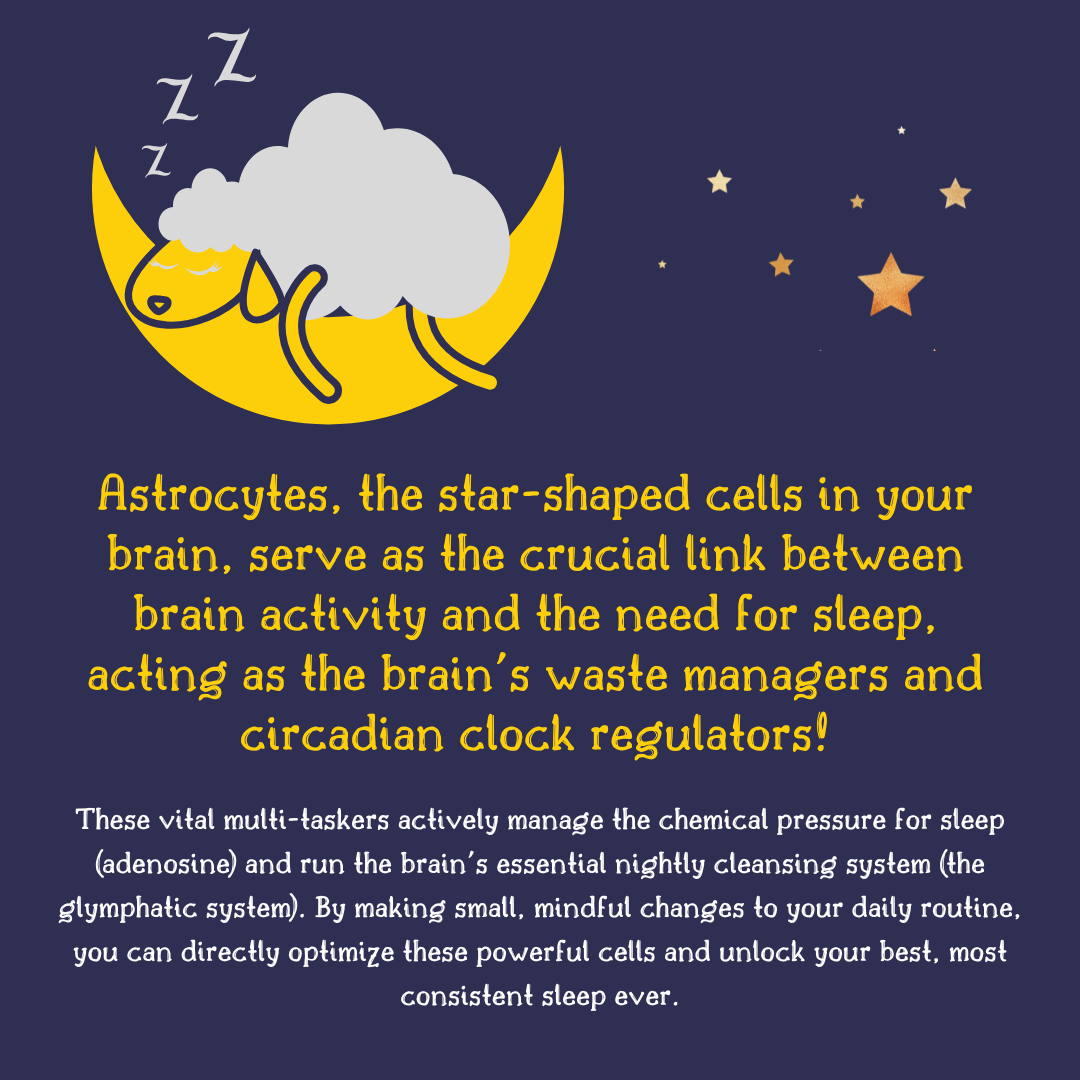
Astrocytes are the most numerous and well-studied type of glial cell. They get their name from their distinctive, star-like shape (astro = star; cyte = cell). They wrap themselves around blood vessels and connections between neurons (synapses), acting as the ultimate multi-taskers in your brain.
Here’s why astrocytes are so important for your overall health, beyond just sleep:
Fuel Delivery: They act like the brain's pit crew, transporting essential nutrients, especially glucose (sugar), from your blood vessels to your active neurons.
Waste Removal: They help maintain a clean environment by clearing away excess chemicals and ions from around the neurons.
Connection Control: Most importantly, they directly influence how neurons communicate. They can strengthen or weaken the connections between neurons, which is critical for learning, memory, and, as we'll see, transitioning between being awake and asleep.
Understanding this dual role—supporting the brain's environment and actively shaping its communication—is the first step to seeing why they are central to the sleep-wake cycle.
How Do Astrocytes Regulate Sleep and Wakefulness?
The simple answer is that astrocytes are constantly monitoring the energy demands and chemical byproducts of your brain's activity. As the day goes on, your neurons work hard, consuming energy and producing chemical "waste." Astrocytes are key in sensing this accumulation and signaling that it's time to transition into sleep.
The Adenosine Connection: The Pressure for Sleep
The most powerful chemical signal that builds up while you are awake is adenosine. Think of adenosine as a biological "pressure gauge" for sleep. The longer you're awake, the more adenosine accumulates in the space between your brain cells.
Recent research confirms the astrocyte's vital role in this process:
Astrocyte as Adenosine Manager: Astrocytes are primarily responsible for releasing adenosine into the extracellular space, as well as absorbing and recycling it. When they release adenosine, it binds to receptors on neurons, slowing down their activity and making you feel tired—the classic "sleep pressure."
The Caffeine Effect: When you drink coffee, the caffeine molecule actually blocks the adenosine receptors, which is why you feel awake. But the underlying buildup of sleep pressure, managed by your astrocytes, is still there! This is why you often "crash" when the caffeine wears off.
In a 2021 study published in Nature, researchers demonstrated that selectively reducing the function of astrocytes in specific brain regions reduced the accumulation of adenosine and led to a significant decrease in the amount of non-REM (deep) sleep in mice. This showed a direct, causal link: A healthy, functioning astrocyte is necessary for building the deep sleep required for recovery.
Why are Astrocytes Essential for Your Circadian Rhythm?
Your circadian rhythm is the 24-hour cycle that tells your body when to sleep, wake up, and even when to release certain hormones. This rhythm is controlled by a master clock in your brain called the Suprachiasmatic Nucleus (SCN).
While the SCN is composed mostly of neurons, the astrocytes surrounding these neurons play a critical part in making sure the clock keeps accurate time.
The Glymphatic System: The "Nightly Wash"
The brain's waste clearance system, known as the glymphatic system, is most active when you are asleep. The term "glymphatic" is a nod to its reliance on glial cells (like astrocytes) and its function, similar to the body's lymphatic system.
How the Glymphatic System and Astrocytes Work Together:
Water Channel Opening: As you fall asleep, astrocytes physically shrink and change shape. This change is facilitated by the release of norepinephrine (a hormone) and opens up the spaces between brain cells.
Brain Fluid Flow: This opening allows a rush of cerebrospinal fluid (CSF) to flood the brain, essentially washing away accumulated toxins and waste products, including amyloid-beta (linked to Alzheimer's disease).
The Sleep-Rhythm Link: A 2020 review in the Journal of Sleep Research highlighted that the rhythmic shrinking and swelling of astrocytes throughout the 24-hour cycle is an essential component of the brain's ability to maintain a healthy sleep-wake cycle and clear waste. Disruptions to this daily cycle of astrocyte activity are directly linked to disrupted circadian rhythms.
Is It Possible to Optimize My Astrocytes for Better Sleep?
The good news is that you don't need a lab coat to help your star-shaped cells do their job better. Since astrocytes are highly sensitive to your environment and lifestyle, simple, concrete changes can make a massive difference in how effectively they regulate your sleep pressure and circadian clock.
Here are 7 actionable, easy-to-implement steps based on the science of astrocyte and sleep regulation:
Be Consistent with Sleep Timing (The Rhythm Fix): Astrocytes rely on a predictable 24-hour cycle (circadian rhythm) to perform their shrinking and waste-clearing duties. Try to wake up and go to sleep within a 30-minute window every day, even on weekends. This is the single most powerful step to support your astrocytes' timing.
Stay Hydrated, Especially Before Bed (The Wash Cycle): The glymphatic system requires cerebrospinal fluid to work. Drinking enough water throughout the day (but avoiding excessive amounts right before bed to prevent middle-of-the-night bathroom trips) helps ensure your brain has the fluid it needs for its nightly wash.
Time Your Caffeine Use Carefully (The Adenosine Tweak): Remember, caffeine blocks adenosine, but it doesn't clear the sleep pressure built up by your astrocytes. Stop all caffeine intake at least 8 hours before your target bedtime. For a 10 PM bedtime, this means no coffee after 2 PM.
Embrace Darkness Before Sleep (The Melatonin Helper): Light, especially blue light from screens, is the most powerful signaler to your master clock (SCN) that it's daytime. This signal can interfere with the nightly changes astrocytes need to undergo. Use 'night mode' on devices or wear blue-light-blocking glasses for the last hour before bed.
Prioritize Your Deep Sleep (The Recovery Phase): Deep sleep (Non-REM Stage 3) is when the astrocyte's work is most robust. A 2019 paper in Sleep found that sleep deprivation impairs the astrocyte's ability to manage synapses and maintain normal brain plasticity. To get more deep sleep, ensure your bedroom is completely cool, dark, and quiet.
Try Low-to-Moderate Intensity Exercise (The Circulation Boost): Regular, moderate exercise improves blood flow to the brain, which in turn helps astrocytes perform their role as the "pit crew," efficiently delivering fuel and removing byproducts. Avoid intense exercise too close to bedtime (within 3 hours).
Manage Inflammation Through Diet (The Environmental Support): Astrocytes are sensitive to inflammation. A diet rich in anti-inflammatory omega-3 fatty acids (found in fish, walnuts, and flaxseed) and antioxidants (found in colorful fruits and vegetables) helps create a healthier environment for your astrocytes to thrive.
The Future of Sleep: Understanding Your Brain's Star Performers
The study of astrocytes is a rapidly growing field, moving them from the "supporting cast" to the "lead actors" in our understanding of sleep and brain health. As we've learned, they are not just passively regulating; they are actively dictating when and how deeply you sleep.
By focusing on a consistent rhythm, managing sleep pressure (adenosine), and supporting the brain's nightly cleansing (glymphatic system), you are directly optimizing the function of your astrocytes. A healthy astrocyte means a well-timed, well-cleaned, and well-rested brain.
-
Xing, L., A. V. P. G. U. R. S. N. V., & D. D. J. W. K. L. M. E. (2021). Astrocyte-mediated adenosine drives sleep homeostasis. Nature, 598(7880), 323–328.
Ding, F., H. X. J. K. N. H. S. V. D. D. (2020). Astrocyte-regulated glymphatic system function in sleep and circadian rhythm. Journal of Sleep Research, 29(5), e13123.
Bellesi, M., A. A. C. B. C. G. V. A. E. G. J. W. K. R. R. A. T. H. Z. H. F. C. (2019). Sleep deprivation impairs astrocyte-mediated plasticity in the mouse cerebral cortex. Sleep, 42(9), zsz143.