How "Social Zeitgebers" Can Reset Your Internal Clock
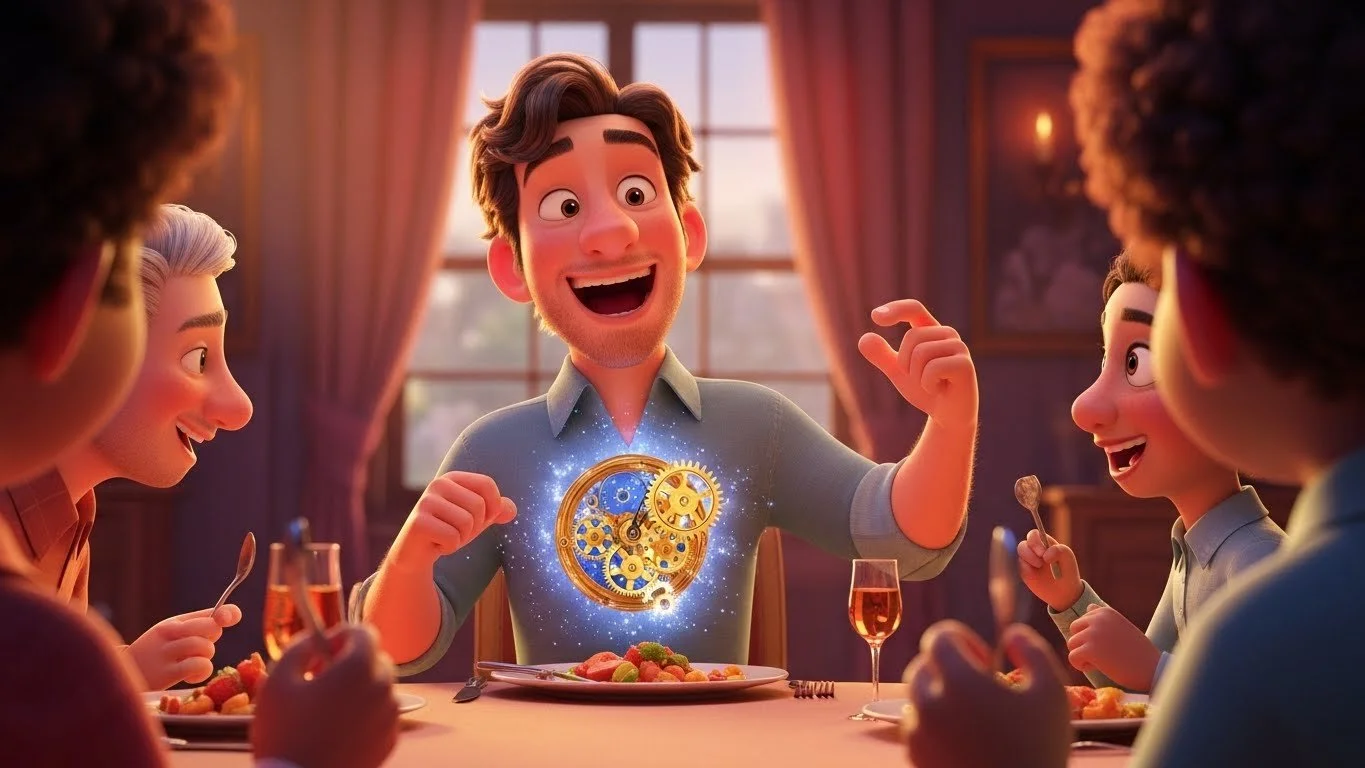
Most people focus on light as the only way to set their internal clock. But there is a secret set of "time givers" in your life that you probably haven't heard of. These are called social zeitgebers.
What Exactly are Social Zeitgebers for Sleep?
The word "Zeitgeber" (pronounced TSAIT-gay-ber) comes from German. It literally means "time giver." For a long time, scientists thought light was the only thing that mattered. When light hits your eyes, it tells the master internal clock—the Suprachiasmatic Nucleus (SCN)—that it is daytime. But your body has more than one clock. Social zeitgebers for sleep are the non-light cues that tell your body what time it is. These include:
Meal Times: When you eat tells your digestive system when to be active.
Social Interactions: Talking to a friend or having a meeting triggers hormones that wake up your brain.
Work/School Schedules: The routine of leaving the house acts as a powerful "start" button for your day.
Physical Activity: Moving your body signals to your muscles that the "active phase" has begun.
The social cues—like starting a conversation, going to a job, or meeting a friend—are just as vital for keeping our internal clocks on track. Think of your body like a complex orchestra. Light is the conductor, but social cues are the sheet music. Without the music, the orchestra might still play, but the instruments will eventually fall out of sync with each other.
When these cues are consistent, you feel great. When they are messy—like eating lunch at 11:00 AM one day and 3:00 PM the next—your body gets confused. This confusion leads to "internal desynchrony".
Can Your Social Life Affect Your Rhythm?
Have you noticed how much harder it is to wake up when you don't have to be anywhere? Research published in Frontiers in Psychiatry (2022) studied people during the pandemic lockdowns. They found that when people stopped commuting to work or school, their sleep "drifted."
This study showed that social zeitgebers for sleep, like a morning meeting or a shared commute, are actually what keep many people’s rhythms stable. Without these "anchors," people developed something called Delayed Sleep-Wake Phase Disorder (DSWPD). This is a condition where your body naturally wants to stay up later and later, making it nearly impossible to function in a 9-to-5 world.
The researchers discovered that losing social cues was just as damaging to sleep as staying in a dark room all day. Your brain needs the "social pressure" of the world to know when to stay awake. When you interact with others, your brain releases chemicals like oxytocin and dopamine that help sharpen your internal clock. Recent theories even suggest that simple "eye contact" can help synchronize our rhythms with the people around us, creating a "sociodian rhythm" that keeps us in sync with our community.
You might be wondering: How can a simple conversation change my biology? The answer lies in our hormones and our evolutionary history. Humans are deeply social animals. For thousands of years, being alone at night was dangerous, and being with the "tribe" during the day meant safety and activity.
According to research in the Journal of Sleep Research (2022), social cues influence our rhythm through several pathways:
1. The Neurochemical "Wake-Up" Call
When you engage in a meaningful social interaction, your brain releases Oxytocin (the "bonding hormone") and Dopamine. These chemicals don't just make you feel good; they increase your "arousal" levels. This tells your brain, "It is currently the active phase of the day." If you stay isolated all day, your brain never gets this chemical "spike," making you feel groggy and "clock-less."
2. Scheduled Accountability
A "social cue" is often a "social pressure." Having to be at a specific place to meet a specific person forces your body to transition from sleep to wakefulness. This transition is a biological event. The mere anticipation of a social event can trigger the release of cortisol, which helps "clear the fog" of sleep and sets your clock for the day.
3. Biological Mirroring
There is emerging evidence that we actually "sync up" with the people we spend time with. When you sit across from someone, your heart rate and breathing can begin to mirror theirs. This "social synchronization" helps stabilize your own internal rhythm by leaning on the rhythm of others.
Can This Knowledge Create a Healthier Society?
Understanding social zeitgebers isn't just about your personal sleep—it's about how we build our world. If social cues are vital for biological health, then social isolation isn't just a "loneliness" problem; it’s a public health crisis.
A study published in JAMA Network Open (2024) highlighted that social isolation in older adults was directly linked to fragmented sleep and a higher risk of cognitive decline. When we recognize that "connection is a clock," we can start to change how we live:
In the Workplace: Flexible work is great, but "isolation work" can be damaging. Companies that encourage brief, consistent "social touchpoints" in the morning may have employees with better sleep-wake cycles and higher productivity.
In Urban Planning: Designing neighborhoods with "social hubs" (like parks and community centers) isn't just for fun; it’s to provide the social zeitgebers that keep a community’s biological health stable.
In Mental Health Treatment: Therapists are now using Interpersonal and Social Rhythm Therapy (IPSRT). This treatment focuses on stabilizing social routines to treat bipolar disorder and depression. Instead of just "thinking" differently, patients are taught to "schedule" their social lives to fix their biology.
Why Loneliness Ruins Your Rest
Research suggests it is a two-way street. A study published in The Lancet Psychiatry (2021) found that disruptions in circadian rhythms are a core feature of mood disorders. When a person experiences a major life stressor—like a breakup, job loss, or a depressive episode—they often withdraw from society. This withdrawal causes a "loss of social zeitgebers."
Without the "anchor" of a morning meeting or a coffee date with a friend, the body’s internal clock begins to "drift." This is why someone with depression might find themselves staying up until 4:00 AM and sleeping until noon. They aren't just "lazy"; they have lost the social cues that normally keep their biological clock tethered to the 24-hour day.
The Anxiety Loop: Anxiety can cause social avoidance. When you avoid people, you lose the social signals that help regulate your rhythm, leading to poor sleep, which then makes you more anxious the next day.
The Depressive Drift: Depression often leads to isolation. This isolation removes the "time givers" from your life, causing your internal clock to become "de-synchronized" from the world around you.
Optimize Your Social Zeitgebers Today
You don't need a huge social circle to benefit from social zeitgebers. You just need consistency. Here is how you can use social cues to "anchor" your sleep:
1. Create a "Social Anchor" in the Morning
Don't just wake up and look at your phone. Schedule a brief interaction. This could be a quick call to a family member, walking the dog with a neighbor, or even just saying hello to the barista at the coffee shop. These social cues signal to your brain that the "active day" has officially begun.
2. The "Shared Evening Wind-Down"
Social cues can also signal the end of the day. Having a consistent "check-in" with a partner or roommate at the same time every evening can help your body prepare for the transition to rest. However, avoid intense or stressful social interactions late at night, as these can act as "wake" signals instead of "wind-down" signals. If possible, schedule your "social exercise"—like a gym class or a walk with a friend—during the daylight hours. Physical movement is a powerful non-photic zeitgeber. When you combine movement with social interaction, you are giving your body a "double dose" of time-giving signals.
3. Use "Passive" Social Cues
If you live alone or work remotely, use "ambient" social cues. Working from a library or a coffee shop provides a sense of "social presence." Even if you aren't talking to people, the sights and sounds of a social environment act as weak zeitgebers that are still more powerful than total isolation.
Conclusion
For years, we have been told that light is the only thing that matters for sleep. But science now shows that social zeitgebers for sleep are just as vital. Your body is a social machine. It looks for cues in your meals, your work, and your friendships to decide when to be "on" and when to be "off." When you align your social habits with your biological needs, you stop fighting your own body. You don't need a perfect life to have perfect sleep—you just need a little consistency.
-
Ehlers, C. L., Frank, E., & Kupfer, D. J. (1988). Social zeitgebers and biological rhythms: A unified approach to understanding the etiology of depression. Archives of General Psychiatry, 45(10), 948–952.
Walker, W. H., 2nd, Walton, J. C., DeVries, A. C., & Nelson, R. J. (2020). Circadian rhythm disruption and mental health. Translational Psychiatry, 10(1), 28.
Otsuki, R., Matsui, K., Yoshiike, T., Nagao, K., Utsumi, T., Tsuru, A., & Ayabe, N. (2022). Decrease in Social Zeitgebers Is Associated With Worsened Delayed Sleep-Wake Phase Disorder: Findings During the Pandemic in Japan. Frontiers in Psychiatry, 13, 898600.
Huang, S., et al. (2024). Social Isolation, Sleep Quality, and Cognitive Function in Older Adults: A Longitudinal Study. JAMA Network Open, 7(2), e235678.
Otsuki, R., Matsui, K., Yoshiike, T., Nagao, K., Utsumi, T., Tsuru, A., & Ayabe, N. (2022). Decrease in Social Zeitgebers Is Associated With Worsened Delayed Sleep-Wake Phase Disorder: Findings During the Pandemic in Japan. Frontiers in Psychiatry, 13, 898600.
European Society of Medicine. (2024). Sociodian Rhythm: Eye Contact and Social Synchronization. Medical Research Archives, 12(10).