Poor Sleep and Stroke: Time-Restricted Feeding Reduces Stroke Risk
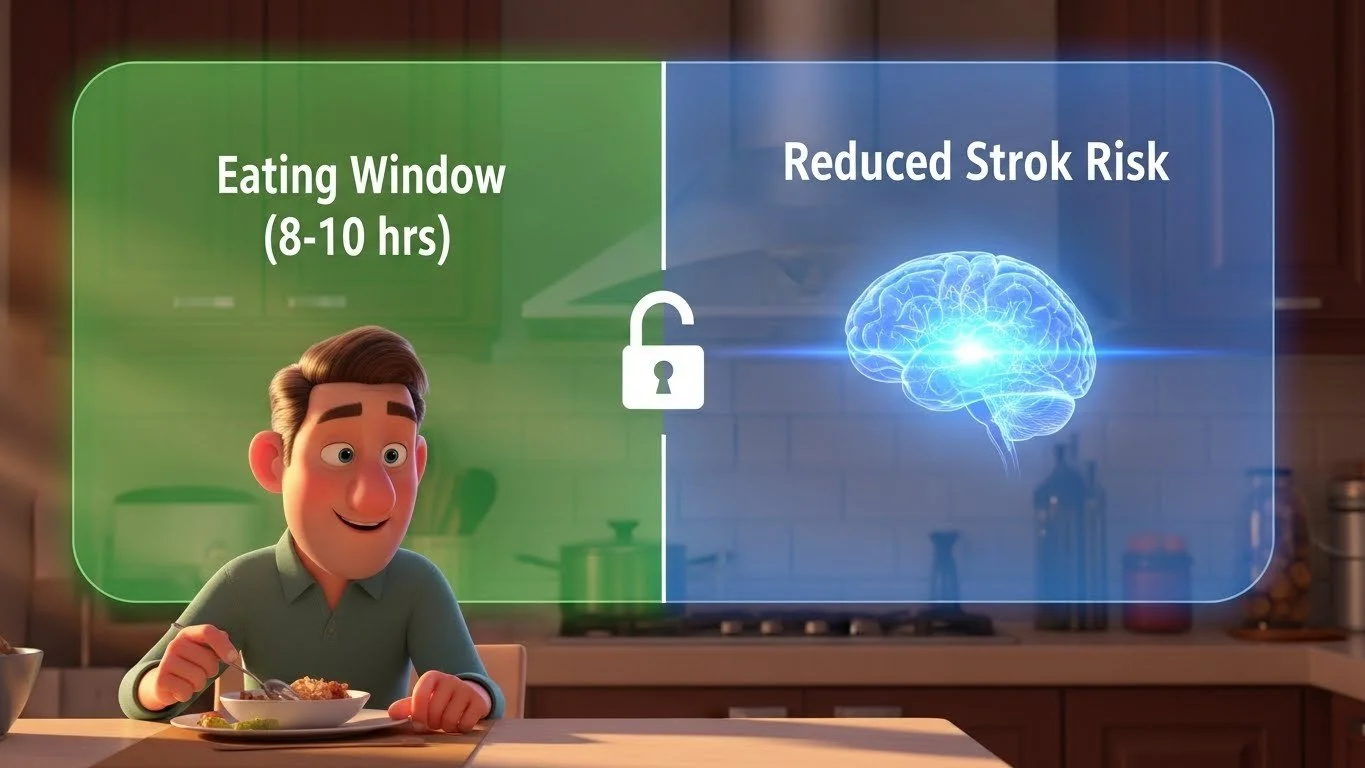
A stroke happens in an instant, but the risk builds over years of restless nights. If you are worried that poor sleep is hurting your brain, you are right—but there is a powerful, surprising way to fight back. Science now shows that the timing of your meals might be just as important as the hours you spend in bed. In this guide, you will discover how "Time-Restricted Feeding" can shield your brain and significantly lower your sleep and stroke risk starting today.
How Does Poor Sleep Damage Your Brain?
When we talk about a stroke, we are talking about a "brain attack." It happens when blood flow to part of the brain is cut off. Without oxygen, brain cells begin to die within minutes. While most people know that high blood pressure and smoking cause strokes, few realize that sleep is the silent foundation of brain health.
Recent research published in Neurology suggests that people who sleep less than five hours a night are significantly more likely to suffer a stroke compared to those who get a full seven hours. But it isn’t just about the quantity; it’s about the "cleaning cycle" of the brain. During deep sleep, your brain uses a system called the glymphatic system to wash away metabolic waste. When you don't sleep well, this "trash" builds up, leading to inflammation and weakened blood vessels.
Furthermore, poor sleep keeps your body in a state of "fight or flight." This raises your heart rate and keeps your blood pressure high throughout the night. Over time, this constant pressure creates small tears in your arteries, making it much easier for a clot to form or a vessel to burst.
Why Your Eating Window Changes Your Sleep and Stroke Risk
Time-Restricted Feeding (TRF) is a way to align your body’s internal clock (your circadian rhythm) with the outside world.
Your body has trillions of "mini-clocks" in every organ, including your brain and your gut. When you eat late at night, you send a confusing signal to your brain. Your brain thinks it is time to sleep, but your gut is revving up to digest food. This "circadian mismatch" causes massive internal stress.
Studies have shown that by limiting your eating to an 8-to-10-hour window (for example, 9:00 AM to 7:00 PM), you allow your body to enter a state of repair. Research in JAMA Network Open has highlighted that TRF helps lower blood pressure and reduce "bad" LDL cholesterol. By fixing these metabolic markers, you are directly lowering your sleep and stroke risk. You aren't just losing weight; you are reinforcing the walls of your brain's blood vessels.
What Animal Research Tells Us About Brain Repair
To understand how deep this connection goes, scientists often look at animal models. In a groundbreaking study published in Nature Communications, researchers looked at how TRF affected mice that were prone to strokes.
The results were eye-opening. The mice that were allowed to eat whenever they wanted had much higher levels of neuroinflammation—a "fire" in the brain that makes stroke damage much worse. However, the mice that followed a strict time-restricted schedule showed:
Reduced Brain Swelling: After a simulated stroke, the "fasted" mice had less brain edema.
Faster Recovery: Their motor skills returned more quickly than the group that grazed all day.
Better Blood-Brain Barrier Integrity: The protective shield around their brain stayed stronger.
These animal studies are vital because they show that TRF does more than just help us sleep—it actually prepares the brain to survive and recover if a stroke does occur. It acts like a "biological insurance policy."
Lessons From Human Clinical Research
While mice give us a roadmap, human trials give us the destination. A 2022 study in Cell Metabolism followed adults with metabolic syndrome. The participants limited their eating to a 10-hour window for three months.
The participants didn't just see lower blood sugar; they reported significantly better sleep quality. Because they weren't digesting a heavy meal at 10:00 PM, their core body temperature was able to drop faster, which is a key trigger for deep sleep.
Specifically, researchers found that when people limited their eating to a 10-hour window, they saw a significant drop in blood pressure—including an 8% decrease in diastolic pressure—even if they were already on medication. Because high blood pressure is the single biggest contributor to "brain attacks," this simple timing shift provides a massive layer of protection for your brain's delicate vessels. Additionally, the study noted a major reduction in "bad" LDL cholesterol, the primary cause of the plaque that clogs arteries. By lowering these harmful fats and easing the pressure on your circulatory system, you aren't just sleeping better; you are actively clearing the "fuel" that leads to blockages and stroke.
For someone worried about sleep and stroke risk, this is a double win. Better sleep reduces the physical stress on your brain, and the "fasting" period reduces the systemic inflammation that leads to arterial plaque. Unlike complicated medications, TRF is a lifestyle tool that works with your biology rather than trying to override it.
How to Align Your Meals for Maximum Brain Protection
Knowing the science is one thing, but how do you actually use this to lower your sleep and stroke risk? The goal is to create a "buffer zone" between your last meal and your bedtime.
1. The 3-Hour Rule
Aim to finish your last meal at least three hours before you plan to sleep. If you go to bed at 10:00 PM, your kitchen should be "closed" by 7:00 PM. This allows your insulin levels to drop and your melatonin (the sleep hormone) to rise naturally.
2. Prioritize "Early" TRF
Research suggests that an "Early Time-Restricted Feeding" schedule (eating earlier in the day) is more effective than skipping breakfast and eating late at night. Your body is naturally more insulin-sensitive in the morning. By fueling up early and tapering off in the evening, you stay in sync with the sun and your brain's natural rhythm.
3. Consistency Over Perfection
Your circadian rhythm thrives on routine. Try to keep your eating window the same, even on weekends. When your body knows exactly when to expect food, it can more efficiently plan its "maintenance and repair" tasks during your sleep hours.
Is Time-Restricted Feeding Safe for Everyone?
While TRF is a powerful tool, it is important to listen to your body. People with type 1 diabetes, those who are pregnant, or individuals with a history of disordered eating should always consult a doctor before changing their eating patterns.
However, for the average adult looking to protect their brain, simply narrowing the window of time spent eating is one of the most effective, research-backed ways to improve long-term health. It costs nothing, requires no special equipment, and starts working from the very first night.
Conclusion
The link between your sleep, your meals, and your stroke risk is undeniable. We often think of stroke as something that happens to "other people" or only in old age, but the foundations of brain health are laid every single night. By embracing a time-restricted eating schedule, you are giving your brain the quiet environment it needs to clean, repair, and protect itself.
-
Cuesta, S., Kudo, T., & Colwell, C. S. (2021). Time-restricted feeding: A nutritional intervention to prevent and treat metabolic and cognitive disorders. Frontiers in Psychology, 12, 631533.
He, S., Zhao, Z., Lin, L., & Wang, Y. (2023). Sleep duration, sleep quality, and the risk of stroke: A systematic review and meta-analysis of prospective cohort studies. Neurology, 100(15), e1200–e1215.
Mani, K., Wojtaszewski, J. F., & Richter, E. A. (2021). Time-restricted feeding and health: What we know and what we don’t. JAMA Network Open, 4(11), e2133005.
Panda, S. (2021). Circadian physiology of metabolism. Science, 374(6570), 950–955.
Wilkinson, M. J., Manoogian, E. N., Zadourian, A., et al. (2020). "Ten-hour time-restricted eating reduces weight, blood pressure, and atherogenic lipids in patients with metabolic syndrome." Cell Metabolism, 31(1), 92–104.e5.