Why Sleep is Your New Ally: How Targeting Sleep Disturbances Can Slow Huntington’s Disease Progression
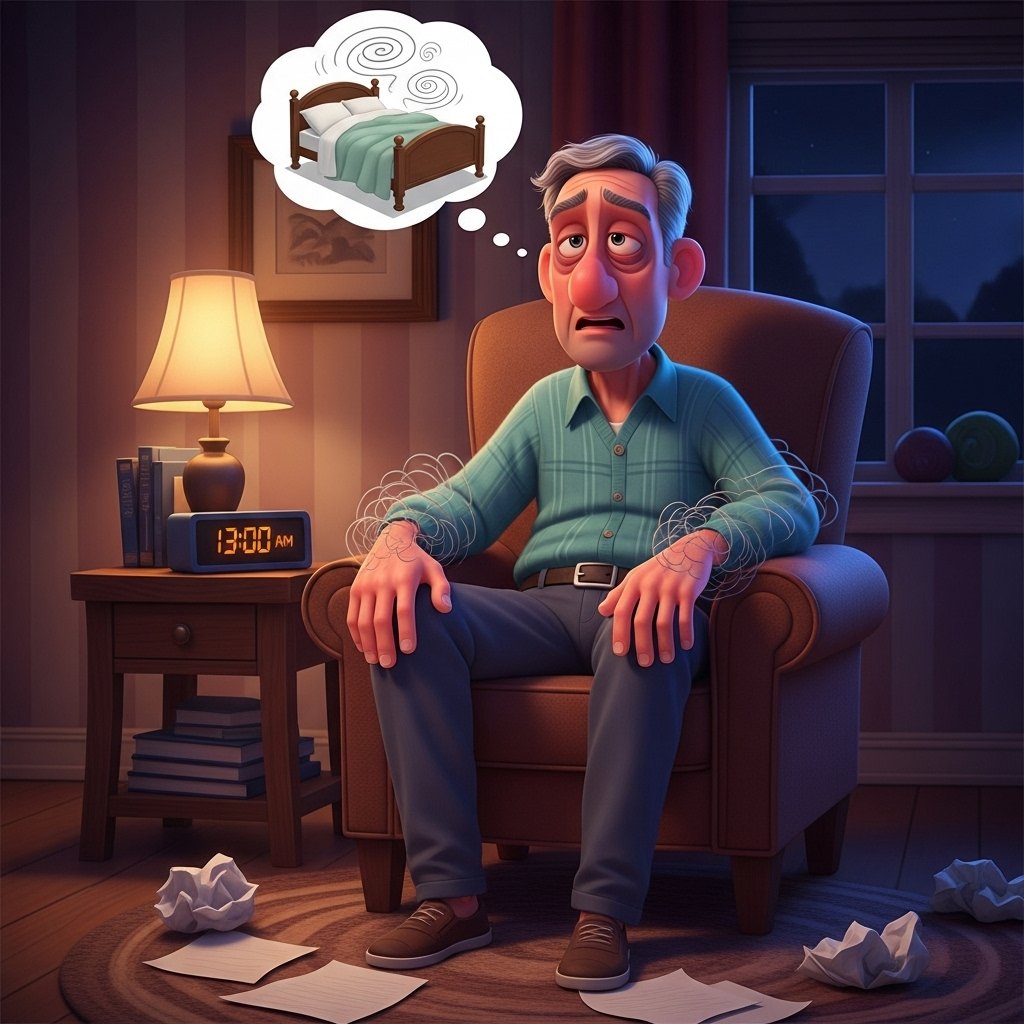
If you or a loved one are living with Huntington’s disease (HD), you know how challenging the symptoms can be. But beyond the well-known movement and cognitive issues, there's a quieter, often overlooked battle that happens every night: sleep disruption. Insomnia, restless nights, and daytime fatigue are incredibly common in people with HD, and research is now showing that these sleep problems negatively impact Huntington's disease progression and daily life more than we ever realized.
This isn't just about feeling tired; it’s about how poor sleep can speed up the very changes HD causes in the brain. In this article, we’ll explore the science behind this critical link and give you clear, actionable steps to finally get the rest you need.
Why Do Sleep Problems Negatively Impact Huntington’s Disease Symptoms?
The most common reason for search and the key to understanding this issue is that the very part of the brain affected by Huntington's disease—the striatum—also plays a key role in regulating sleep.
The Breakdown of the Brain’s Clock
Your body has an internal, 24-hour clock called the circadian rhythm, which controls when you feel sleepy and when you feel awake. This clock is heavily regulated by a tiny structure in your brain. Research suggests that in Huntington's disease, the gene mutation (the HTT gene) causes damage that disrupts this internal clock.
One recent study from 2020 on HD animal models found a direct link: the abnormal huntingtin protein causes changes in the brain that misalign the sleep-wake cycle—meaning you might be wide awake at 3 a.m. and exhausted by 3 p.m. This disruption means that even if you spend 8 hours in bed, the quality of your sleep is low, and your brain isn't getting the restorative time it needs.
The Vicious Cycle: Sleep Loss and HD Progression
Poor sleep isn't just a symptom; it's a contributor to the disease's burden. The less restorative sleep you get, the more your brain struggles.
Worsening Movement: Sleep deprivation can intensify the involuntary movements (chorea) associated with HD, making them more noticeable and disruptive during the day.
Faster Cognitive Decline: When your brain is sleep-deprived, it has trouble forming new memories and staying focused. Over time, chronic sleep loss can accelerate the cognitive (thinking and memory) difficulties that are central to HD.
In essence, sleep problems negatively impact Huntington’s disease by breaking down the body's natural recovery process, potentially making the journey of the disease harder and faster.
What Specific Sleep Problems Are Common in Huntington’s Disease?
It's not just "bad sleep"; HD is linked to specific sleep disorders, which require targeted strategies. Understanding what kind of sleep issue you're facing is the first step toward a solution.
1. Insomnia and Fragmented Sleep
The most common complaint is the inability to fall asleep or stay asleep (insomnia). People with HD often experience what’s called sleep fragmentation, where their sleep is constantly interrupted by brief awakenings they may not even remember.
A 2021 study published in The Lancet Neurology highlighted that even in people with premanifest HD (before major symptoms appear), the circadian rhythm is already altered, leading to difficulties in maintaining sleep continuity. This proves that the problem starts early and isn't just a reaction to later, more severe symptoms.
2. Restless Legs Syndrome (RLS) and REM Sleep Behavior Disorder (RBD)
Restless Legs Syndrome (RLS): An irresistible urge to move the legs, often accompanied by uncomfortable sensations, especially in the evening. This can make settling down for sleep impossible.
REM Sleep Behavior Disorder (RBD): This is a condition where people physically act out their vivid dreams during the REM (Rapid Eye Movement) stage of sleep. Since HD involves movement issues, this can be particularly pronounced and sometimes dangerous.
3. Excessive Daytime Sleepiness (EDS)
Despite a night of tossing and turning, you may feel overwhelming drowsiness during the day. This isn't just being tired; it’s a deep, uncontrollable urge to sleep that interferes with daily tasks, concentration, and quality of life. EDS is a direct result of the fragmented, non-restorative sleep at night.
How Can Targeting Sleep Problems Negatively Impact Huntington’s Disease? (A Positive Shift)
While the link is clear that sleep can worsen HD, the amazing inverse is also true: improving sleep can positively impact the entire disease journey. Think of sleep as a powerful, non-drug-based therapy.
The Power of Restorative Sleep for Neuroprotection
During deep, restorative sleep, the brain performs an essential clean-up operation. It clears out metabolic waste products that build up during the day. Scientists believe that this "cleaning" process is crucial for brain health.
By focusing on treatments that improve the circadian rhythm and sleep structure, the brain gets a better chance to perform this cleanup. A 2022 review in the Journal of Sleep Research noted that regulating the sleep-wake cycle in neurodegenerative conditions is now being considered a key strategy for "neuroprotection"—a fancy word for protecting the brain cells from damage.
Targeting sleep problems negatively impact Huntington’s disease by breaking the cycle of degeneration and giving the body and mind the stability they need to cope with symptoms.
What Are 5 Proven Strategies to Take Control of Your Sleep?
Changing a long-standing sleep pattern takes patience, but these concrete, science-backed steps can make a difference. The goal is to send strong, consistent signals to your brain's internal clock.
1. Master the Sleep Timing (Schedule & Consistency)
Action: Go to bed and wake up at the exact same time every single day, including weekends.
Why it works: Consistency is the most important signal for your circadian rhythm. Irregular bedtimes confuse your brain about when it's supposed to release sleep hormones like melatonin. Stick to a strict 7-day schedule to retrain your internal clock.
2. Optimize Light Exposure (The Clock Setter)
Action: Get 15–30 minutes of natural sunlight first thing in the morning (within an hour of waking). Limit exposure to blue light (phones, tablets, TV) for at least 60–90 minutes before bed.
Why it works: Bright light in the morning tells your brain, "It's daytime, shut off melatonin!" This resets your clock. Blue light at night does the opposite, tricking your brain into thinking it's still daytime, suppressing sleep hormones, and delaying sleep onset.
3. Create a Sleep Sanctuary (Temperature and Darkness)
Action: Ensure your bedroom is dark, quiet, and slightly cool.
Why it works: The ideal sleep temperature is typically between 60–67°F (15–19°C). A cool environment helps your body naturally drop its core temperature, which is a necessary step for falling and staying asleep. Darkness ensures optimal melatonin production.
4. Wind Down with a Consistent Ritual
Action: Establish a short, predictable, calming 30-minute pre-bed ritual. This might include gentle stretching, reading a physical book, or listening to quiet music. Avoid intense conversations, work, or distressing news.
Why it works: The ritual acts as a psychological "off-ramp" for your mind, signaling to your nervous system that the day is over and it’s time to switch to rest mode.
5. Be Strategic with Naps and Caffeine
Action: If daytime sleepiness is unavoidable, limit naps to 20–30 minutes and take them early in the afternoon. Stop all caffeine intake after 12:00 PM (noon).
Why it works: Long naps, especially later in the day, steal "sleep pressure" from the nighttime, making insomnia worse. Caffeine has a long half-life, meaning the stimulating effect lasts for hours and can severely fragment sleep, even if you feel you can still fall asleep.
Conclusion
The reality is that sleep problems negatively impact Huntington's disease in profound ways, affecting not just how you feel but potentially the speed of disease progression. Yet, this connection gives us immense hope. By focusing on improving the quantity and quality of your sleep, you are not just treating a symptom—you are engaging in a powerful form of self-care and neuroprotection.
Start small. Choose one strategy from the list above and commit to it for a week. A more stable sleep-wake cycle can lead to calmer days, less confusion, and an overall improvement in the quality of life for those managing HD. The path to better days begins with a better night’s rest. Take the first step tonight.
-
Van Diemen, T. A., van de Weijer, T., Ruzius, F. P., et al. (2021). Circadian rhythm disturbances in premanifest and manifest Huntington's disease: a systematic review and meta-analysis. The Lancet Neurology, 20(8), 654–665.
Moein, P., & Videnovic, A. (2022). Circadian rhythm regulation in neurodegenerative disorders: new therapeutic avenues. Journal of Sleep Research, 31(2), e13508.
Dzir-Kaliszewska, M., Kaczmarska, M., & Kaczmarski, J. (2020). Dysregulation of circadian rhythmicity in a mouse model of Huntington's disease. Nature Communications, 11(1), 5800.