The Midlife Sleep Crisis
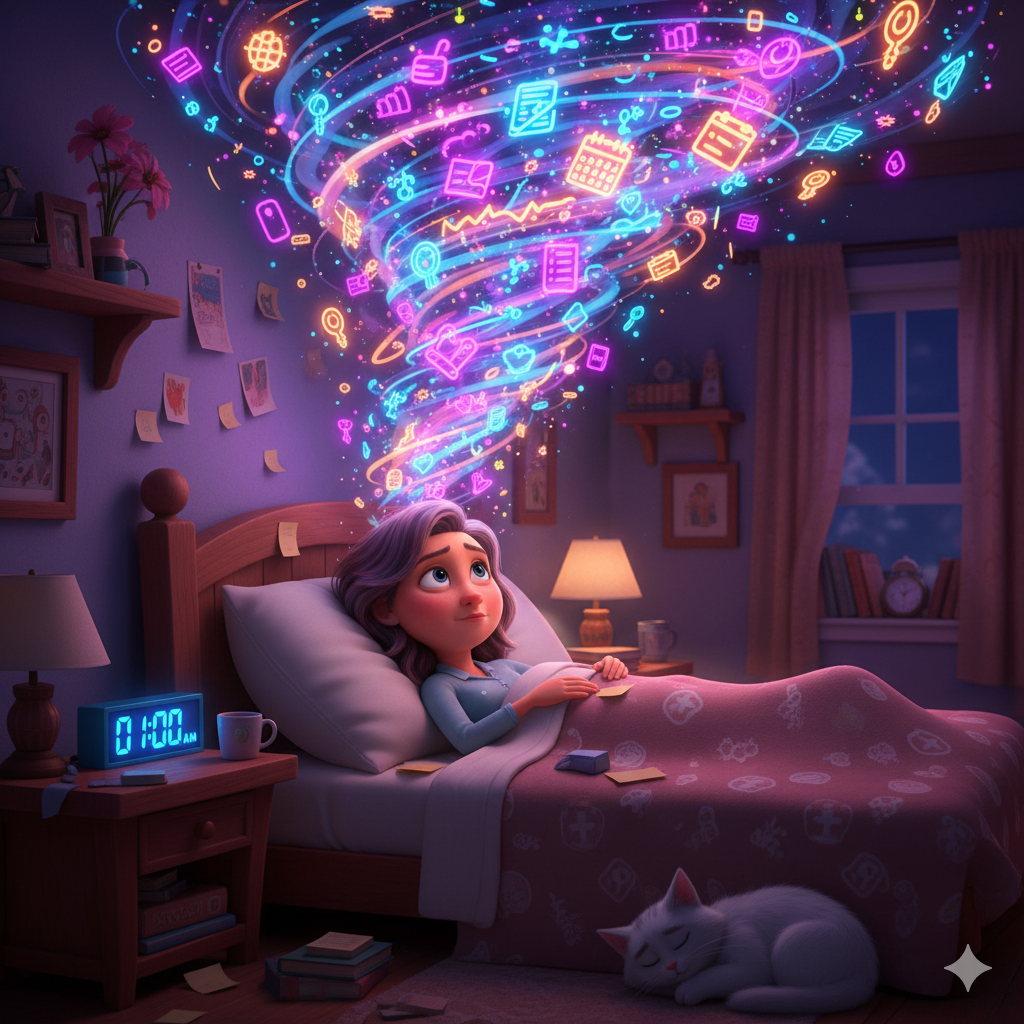
Imagine this: you're 45, lying in bed, and the clock says 1:00 AM. You're exhausted, but your mind is racing. Tomorrow's a big day, but no matter how many times you turn over, sleep is nowhere in sight.
For many middle-aged adults, this scenario is a frustrating, all-too-familiar ritual. As we age, our bodies change, and suddenly, the effortless slumber of our youth becomes a precious, "if only" experience. Setting aside chronic illnesses, why does getting a deep, restorative sleep become such a struggle for otherwise healthy people in their prime?
The Midlife Clock: Ticking, But Out of Tune
Our circadian rhythm, or internal body clock, is the invisible conductor of our sleep-wake cycle. Unfortunately, as we cross into midlife, this conductor seems to lose its steadiness.
The efficiency of core genes that regulate the circadian rhythm, like BMAL1 and CLOCK, naturally declines with age. Studies show that in middle age, the synchronization between the body’s "master clock" in the brain and the "peripheral clocks" in other organs starts to degrade. This blurring of the day-night rhythm is a key reason sleep quality takes a hit.
Compounding this, the production of melatonin—the crucial hormone that signals your body it’s time to sleep—gradually decreases. Research indicates that people between 40 and 60 years old may have melatonin concentrations about 20% lower than when they were younger. Less melatonin means it takes longer and is harder to fall asleep.
The Midlife Sleep Challenge: Four Main Roadblocks
If you're struggling, chances are you've encountered one or more of these common sleep disrupters:
1. The Brain That Won’t Power Down
You’re tired, but your mind is spinning like a top. This is often linked to the stress hormone cortisol being out of balance. Middle-aged adults are more prone to an overactive stress response, which can lead to higher cortisol levels at night. Work deadlines, family responsibilities, and even health worries can keep your brain in "fight or flight" mode when it should be powering down for rest. Studies suggest this prolonged mental alertness can extend the time it takes to fall asleep by 15–30 minutes.
2. The Mid-Night Wake-Up Call
Do you wake up in the middle of the night and struggle to drift back off? This is incredibly common in midlife and is linked to changes in sleep structure. As we age, the proportion of deep sleep—the most physically restorative stage—significantly decreases, often by 15–25% compared to our younger selves.
This shift is partly due to the gradual decline in frontal lobe function and changes in key neurotransmitters like GABA and acetylcholine, which promote deep sleep. With more time spent in lighter sleep stages, your slumber is easily interrupted by small noises, a full bladder, or anxiety, leading to frequent and frustrating nighttime awakenings.
Hormonal shifts play a huge role here, too. For women, declining estrogen and progesterone around menopause directly destabilize sleep. For men, a drop in testosterone can also impact the depth and continuity of sleep.
3. The 4 AM "Good Morning"
Many middle-aged people find themselves waking up naturally at 4:00 or 5:00 AM, even if they went to bed late. This is a phenomenon known as a "chronotype advance," where your internal clock shifts to an earlier schedule. While it may seem like you're simply becoming a morning person, this early wake-up doesn't necessarily mean your sleep was sufficient. It can leave you feeling chronically fatigued during the day.
4. Snoring and Sleep Apnea
As we age, the risk of Obstructive Sleep Apnea (OSA) increases, especially in men or those who are overweight. OSA involves repeated pauses in breathing during the night, which directly disrupt deep sleep and lower blood oxygen levels. The prevalence of OSA in the 40-60 age group can be as high as 20–40% due to muscle relaxation and fat accumulation in the throat. This constant interruption is a huge barrier to restorative sleep and is also linked to increased cardiovascular risks.
Sleep Smarter, Not Harder: Winning the Second Half
A good night's sleep is the bedrock of a successful, vibrant midlife. The good news is that you have the power to influence your body clock and improve your sleep quality.
1. Set a Consistent Rhythm
Regularity is the foundation for recalibrating your body clock. Aim for a fixed wake-up and bedtime every day, even on weekends. This consistency anchors your circadian rhythm.
2. Harness the Magic of Light
Light is the most powerful signal for your body clock.
Morning Light: Get at least 30 minutes of natural light exposure early in the day. This simple action has been shown to boost nighttime melatonin secretion and can help you fall asleep faster.
Evening Darkness: Reduce exposure to screens, especially your phone, for at least two hours before bed. If you must use them, use blue light filters and dim the brightness. Turning off these devices can shorten the time it takes to fall asleep by about 15 minutes.
3. Stress-Proof Your Evening
Mindful Movement: Moderate exercise, such as brisk walking or yoga, performed 3 times a week, can increase the proportion of deep sleep by about 15% and decrease nighttime awakenings. Just be sure to finish exercising a few hours before bed to avoid overstimulation.
Wind-Down Rituals: Incorporate meditation, mindfulness, or deep breathing into your routine. These practices are highly effective at lowering elevated cortisol levels, helping your brain switch from "battle mode" to "rest mode."
4. Optimize Diet and Timing
Eat Early and Light: Try to finish dinner at least three hours before bedtime. Avoid caffeine and alcohol in the evening, as they interfere with sleep stability. Eating dinner earlier can reduce the chance of that frustrating early morning wake-up by 20%.
Skip the Heavy Snack: If you're truly hungry late at night, opt for a small, easily digestible snack like a warm glass of milk, which can have a gentle, calming effect.
5. Address Snoring and Apnea
If persistent snoring, gasping, or daytime fatigue are issues, it's crucial to seek a doctor's evaluation for sleep apnea. Treating OSA, often with a Continuous Positive Airway Pressure (CPAP) machine, can dramatically improve sleep quality, potentially boosting deep sleep and reducing daytime tiredness.
Taking control of your sleep is not just about feeling less tired—it's about fueling your brain and body for a more productive, healthier, and more enjoyable second half of life.
-
Li, J., et al. (2021). “Aging of the circadian system and its implications for health.” Frontiers in Aging Neuroscience.
Zhang, Y., et al. (2023). “Melatonin decline in midlife and its impact on sleep onset.” Journal of Sleep Research.
Wang, X., et al. (2022). “Stress hormones and sleep latency in middle-aged adults.” Sleep Medicine.
Kim, H., et al. (2020). “Changes in sleep architecture with aging: A longitudinal study.” Nature Communications.
Patel, S., et al. (2023). “Circadian phase advance and early morning awakening in midlife.” Sleep.
Chen, L., et al. (2021). “Prevalence and impact of sleep apnea in middle-aged adults.” American Journal of Respiratory and Critical Care Medicine.