From Crib to Big Kid Bed: The Toddler Bed Transition
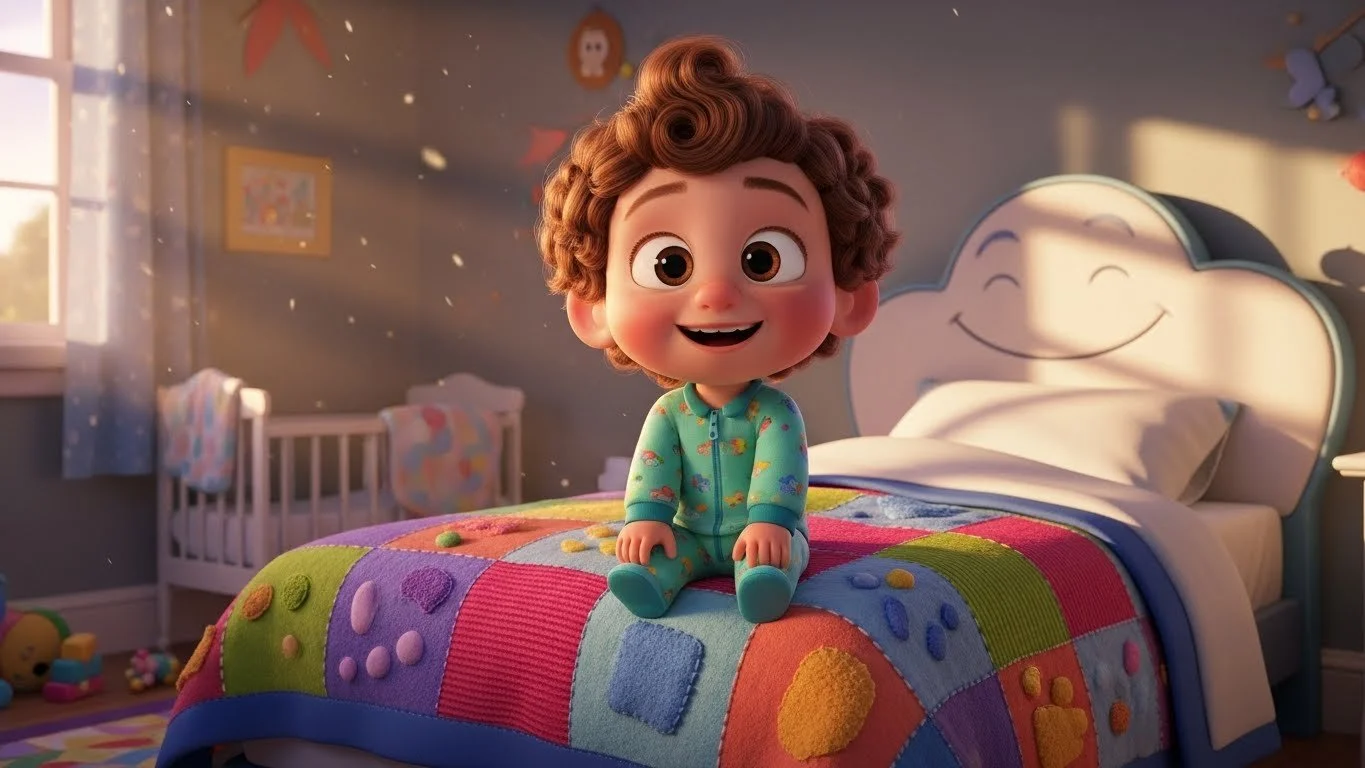
Is your once-peaceful sleeper suddenly acting like a "jack-in-the-box," popping out of bed the second you close the door? Moving from a crib to a big kid bed is a massive milestone, but it often triggers a wave of sleep disruptions that leave parents exhausted. The good news is that this isn't just "bad behavior"—it’s a biological and developmental shift. By understanding how your toddler’s brain works, you can master the toddler bed transition and reclaim your evenings using proven, gentle boundary-setting strategies.
Why Your Toddler’s Brain Isn’t Ready for Total Freedom
When we think about the toddler bed transition, we usually focus on the furniture. However, the biggest change is happening inside your child’s head. Between the ages of 1 and 3, a toddler’s brain is undergoing rapid "synaptic pruning" and development in the prefrontal cortex—the area responsible for impulse control.
Research published in Nature Communications highlights that sleep during this window is critical for reorganizing the brain’s pathways (Mason et al., 2021). When you move a child from a crib to a bed, you are essentially asking a person with almost no impulse control to stay in an invisible box. To them, the lack of crib rails feels like an invitation to explore. They aren't trying to be difficult; their brains are simply wired to test these new, physical boundaries to see if the "rules" of the house still apply in this new environment.
Why Delaying the Toddler Bed Transition is a Secret Superpower
Most parents believe they must move their child out of the crib by age 2. However, the data suggests that waiting might be the smartest move you ever make. A significant study involving over 60,000 caregivers, published in the journal Sleep Medicine, found that children who stayed in a crib until age 3 had better sleep outcomes (Ariel et al., 2018).
These children:
Went to bed earlier.
Fell asleep faster.
Woke up less frequently during the night.
Resisted bedtime less than those who transitioned earlier.
If your child isn't climbing out of the crib or reaching the height limit, there is no biological reason to rush the toddler bed transition. By waiting until closer to age 3, your child’s language skills and cognitive maturity are much higher, making it easier for them to understand and follow "big kid" rules.
How to Handle the "Jack-in-the-Box" Effect
The "jack-in-the-box" effect occurs when a toddler realizes they can physically leave their bed. This is often fueled by a mix of "fearing missing out" (FOMO) and a need for reassurance. To manage this, you must move away from negotiation and toward "low-arousal" interactions.
In the context of the toddler bed transition, we aren't talking about them missing a party or a social media trend. It isn't about missing a party or a social event; it is a biological drive to stay connected to their "pack." When you leave the room, your child’s sharp senses stay alert. They hear the muffled hum of the TV, the clinking of dishes in the kitchen, or the sound of your voice in the next room. To a developing brain, these sounds are "clues" that something exciting is happening without them.
Before the toddler bed transition, the crib acted as a physical stop to this impulse. They might have whimpered or shaken the rails, but they eventually settled because they couldn't leave. Now, with the "bars" gone, that biological urge to join the action translates into them popping out of bed the moment they hear a floorboard creak. They aren't being defiant; they are simply trying to rejoin the tribe.
To manage this, you must move away from negotiation and toward "low-arousal" interactions. A 2020 study in the Journal of Clinical Sleep Medicine emphasized that parental consistency is the single most important factor in managing behavioral insomnia in toddlers (Mindell & Williamson, 2020). When your child pops out of bed, every time you talk to them, give them a snack, or let them snuggle on the couch, you are "rewarding" the escape.
The Strategy: The Silent Return
The First Escape: Walk them back calmly, tuck them in, and say your "goodnight phrase" once (e.g., "It’s time for sleep, I love you").
The Second (and Tenth) Escape: Use no eye contact and no words. Physically guide them back to bed like a gentle robot. This removes the "reward" of your attention.
The Science of Visual Boundaries
Toddlers are literal thinkers. They don't understand the concept of "7:00 AM," but they do understand colors. Because their internal circadian rhythms are still maturing, they often wake up and assume the day has started because they can no longer see the crib bars holding them in.
Using a "color-changing" clock (an "OK-to-wake" clock) provides a visual boundary. Research shows that toddlers respond better to concrete visual cues than abstract verbal instructions. Set the clock to turn green when it’s time to get up. If they wake up and the light isn't green, the "boundary" is still in place. This helps bridge the gap between their developing brain and the expectations of the toddler bed transition.
Why Physical Safety is a Psychological Boundary
During the toddler bed transition, the entire bedroom effectively becomes the "crib." To help your toddler feel secure—and to keep them safe—you must "toddler-proof" the environment to the extreme.
Anchor Furniture: Ensure dressers and bookshelves are bolted to the wall.
Gate the Door: If your child is a frequent wanderer, placing a safety gate at the bedroom door can provide a physical boundary that keeps them in their safe space.
Safety as Comfort: From a psychological perspective, a gated room can actually reduce a toddler's anxiety. When the world is too big, they feel overwhelmed. A confined, safe space allows their nervous system to relax enough to fall into deep REM sleep.
Is it a Growth Spurt or a Sleep Regression?
Sometimes the toddler bed transition fails because of timing. If your child is currently going through a "peak" in separation anxiety (common around 18 months and 2.5 years), moving them to a bed will feel like an abandonment.
Watch for signs of "Executive Function" growth. Is your child starting to sort toys by color? Are they using more complex sentences? If so, their brain is busy. If you layer a furniture change on top of a massive cognitive leap, you are asking for a meltdown. Wait for a "lull" in development—a period of 2-3 weeks where their behavior is relatively stable—to introduce the new bed.
Creating the "Bedtime Bin" to Solve Resistance
One of the most effective, yet underused, tools for the toddler bed transition is the "Bedtime Bin." This is a small box of 3-4 quiet, "boring" toys (like soft books or felt puzzles) that stay in their bed.
The rule is simple: "You don't have to sleep, but you must stay in your bed." This gives the toddler a sense of autonomy—something they crave at this age. By allowing them to "play" quietly in their bed, you lower the power struggle. Most toddlers will interact with the toys for 5-10 minutes before their natural sleep pressure takes over and they drift off.
Conclusion
The toddler bed transition is more than just a change in furniture; it is a graduation into a new world of independence. By focusing on brain development, maintaining "boring" consistency, and using visual tools like wake-up clocks, you can guide your child through this change without losing your mind—or your sleep. Remember, you are not just teaching them to stay in a bed; you are teaching them the lifelong skill of respecting boundaries and listening to their own body's need for rest.
-
Ariel A. Williamson, PhD, Jodi A. Mindell, PhD, Reut Gruber, PhD, et al. (2018). Toddler Sleep Outcomes and Crib-to-Bed Transitions. Sleep Medicine, 54, 16–21.
Mason, G. M., Lokhandwala, S., Riggins, T., & Spencer, R. M. C. (2021). Sleep and cognitive development in early childhood. Nature Communications, 12(1), 1–12.
Mindell, J. A., & Williamson, A. A. (2020). Benefits of a regular bedtime routine: outcomes of a multi-country study. Journal of Clinical Sleep Medicine, 16(1), 21–27.