How to Win the War on Toddler Sleep Issues
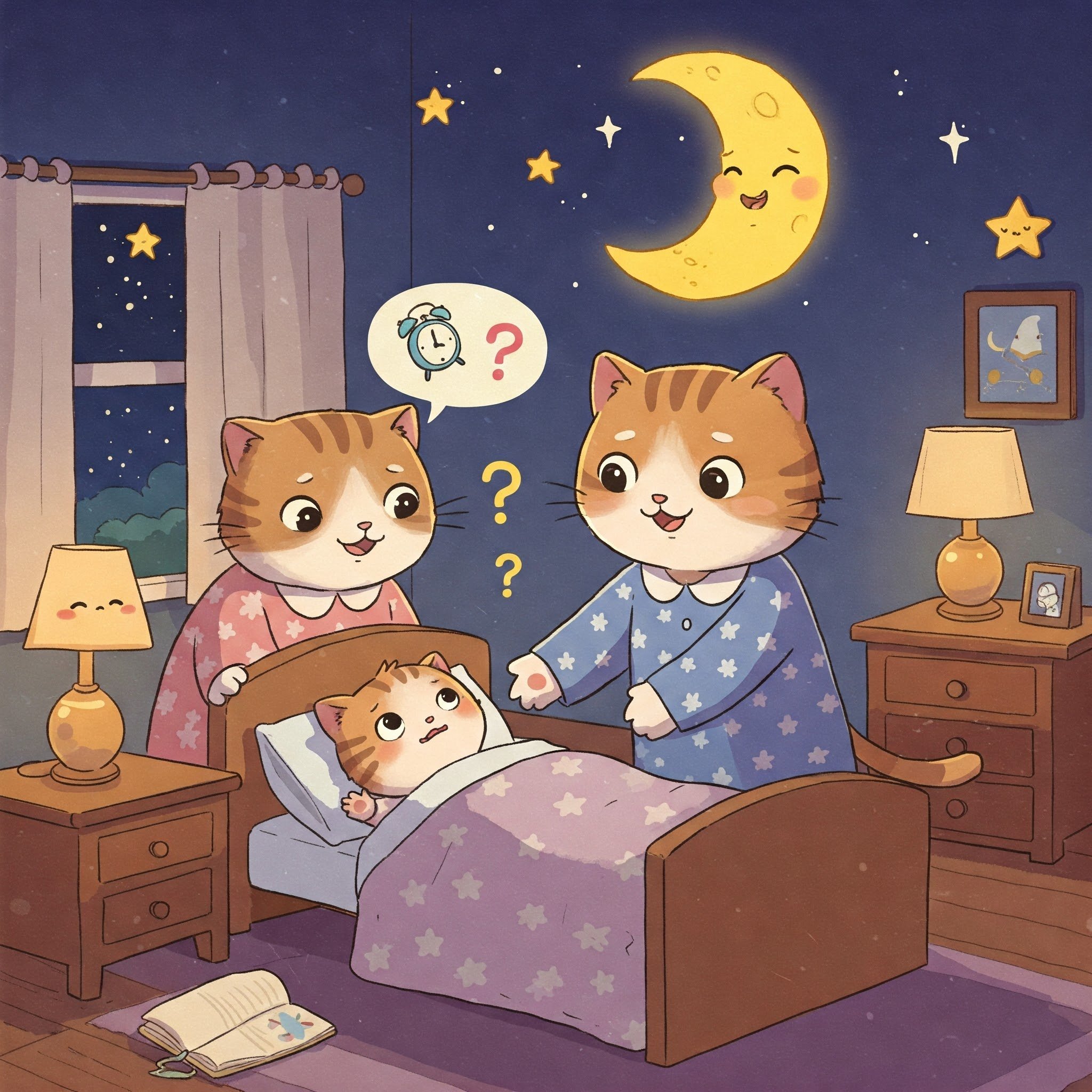
You drag your weary body into your child’s room. It's 2 AM, and your toddler is wide awake and crying. All you can do is gently rock them, watching the clock tick, and praying for the sweet relief of slumber to return.
If this is your reality, you're not alone. This scene is the nightly norm for countless parents with children between the ages of one and five—the toddler and preschool years.
While your little one's internal clock has matured significantly since their infancy—allowing them to consolidate most sleep at night—the challenges are far from over. A surprising to of children in this age group will experience sleep difficulties, often struggling to sleep through the night.
These challenges are diverse: difficulty falling asleep, frequent night-waking, inconsistent napping, and an increased dependence on you. Not only does this fragment your child’s rest, but it leaves you exhausted and running on fumes.
Here's the crucial shift: sleep issues after the first birthday are fundamentally different from those before it. Infant night-waking is often tied directly to immediate physiological needs—hunger, discomfort, or colic. These are often short-term and resolve naturally with growth. Post-infant sleep problems, however, are rooted in the complex interplay of behavioral development and environmental factors. Understanding this difference is the key to a better night's rest for everyone.
Let’s dive into the two major challenges of sleep from age one to five.
The Great Challenge of Falling Asleep
One of the most common sleep struggles for toddlers and preschoolers (up to age 5) is sleep onset difficulty—tossing, turning, and demanding that "one more story" when they should be drifting off. For parents, this can be the most frustrating part of the day. Research indicates that roughly of 2-to-5-year-olds struggle to fall asleep at least three nights a week.
The two main culprits behind this bedtime anxiety are separation anxiety and environmental overstimulation.
Separation Anxiety: The Bedtime Clutch
When you leave the room, your child might cry, protest, or cling to you, delaying their sleep. This isn't manipulation; it’s a genuine developmental phase. Around the 1-to-2-year mark, the attachment bond with parents peaks. Your child views you as their safe base.
Because their prefrontal cortex (the part of the brain that helps predict the future) is still immature, your physical presence equals safety. When you leave, they can't reliably predict your return. This uncertainty, coupled with peak dependence, triggers anxiety. Studies show that for about of children, this fear of separation extends the time it takes to fall asleep by to minutes!
To address this anxiety, you need to build trust and confidence:
Meet the Need for Connection First: Dedicate time each day for focused, high-quality interaction. Put the phone away. Play, read, or walk together, offering undivided attention. This "fills their cup" and lessens the nighttime need for reassurance.
Encourage Independent Exploration: Help your child build confidence in being alone. Research suggests that an interactive style that balances responsiveness with encouraging independence can boost a child's security, potentially reducing excessive nighttime dependence by .
Practice Short Separations and Reunions: Build the critical trust that "Mommy/Daddy always comes back." Play peek-a-boo, or start briefly leaving the room (starting with just 2-3 minutes) during playtime. Always give a quick, calm forecast: "I'm going to the kitchen, and I'll be right back." Gradually exposing a child to short separations can lower their anxiety and increase their acceptance of sleeping alone by about .
The key is this: Strengthening your child’s security and confidence during the day is the most effective way to ease their separation anxiety at night.
The Sensory Challenge: Creating the Perfect Sleep Environment
As toddlers gain the ability to walk and run, their world explodes with new activities and experiences. Their newfound skills not only change how they explore but also make them more sensitive to their surroundings. Toddlers react more strongly to visual, auditory, and tactile stimuli than they did as infants. The sounds of traffic, changes in lighting, or even a stressful day at daycare can impact their night's sleep.
For example, studies have shown that when a child starts daycare, their frequency of night-waking can increase by as much as . If they experience a new environment, like moving house, the risk of sleep disruption goes up. This demonstrates how acutely toddlers register and process their environment.
Here's how to manage the environment and activities before bedtime:
Avoid Evening Overactivity: Schedule intense, high-energy play (running, chasing) earlier in the day. Allowing a child to engage in strenuous activity within an hour of bedtime can delay sleep onset by to minutes because they haven't had enough time to wind down.
Cut the Screen Time: The blue light emitted by screens disrupts your child's circadian rhythm, delaying the release of the sleep hormone, melatonin. Preschoolers who use electronic devices in the minutes before bed may take an average of minutes longer to fall asleep and have a higher risk of night-waking.
Establish a Predictable Routine and Environment: A stable bedtime routine is your secret weapon. Kids who lack a consistent ritual have a higher rate of difficulty falling asleep. The routine and the sleep environment (dark, quiet, familiar) signal safety and predictability, allowing the child to relax.
The Nap Time Tug-of-War
From age one to five, your child’s overall sleep needs drop from about 11-14 hours (including 2-4 hours of naps) to 10-11 hours (with virtually no naps by age 5). This transition is messy.
Toddlers, armed with walking and an explosion of curiosity, often start resisting daytime naps. However, their internal clock and physical stamina haven't fully matured to handle all-day activity. This leads to overtiredness—a state that makes children irritable and inattentive during the day, and ironically, makes them sleep worse at night, potentially increasing night-waking by !
For children in this peak transition age (2-4 years), stick to these guidelines:
Under 3 Years Old: Maintain regular naps, perhaps two shorter ones that consolidate into one. The maximum length should be about minutes.
3 to 4 Years Old: Naps may become a battle, but don't force them. If your child is clearly overtired, a short nap (no more than minutes, preferably before mid-afternoon) is better than a meltdown. If they can skip the nap and still make it to bedtime without significant crankiness, you can ease off.
The journey through toddler sleep is demanding, but these evidence-based strategies—focusing on meeting emotional needs, creating a calm environment, and managing the nap transition—will provide your child with the security and tools they need to become independent, sound sleepers.
-
Mindell, J. A., & Williamson, A. A. (2018). Benefits of a bedtime routine in young children: Sleep, development, and beyond. Sleep Medicine Reviews, 40, 93-108.
Fearon, R. P., et al. (2021). Attachment in early childhood: Advances in theory and research. Developmental Psychology, 57(5), 693-705.
Zeanah, C. H., et al. (2022). Attachment and developmental psychopathology in early childhood. Journal of Child Psychology and Psychiatry, 63(4), 353-365.
Adolph, K. E., & Franchak, J. M. (2020). The development of motor behavior. Child Development Perspectives, 14(2), 92-98.
Liu, Z., et al. (2021). Impact of COVID-19 on the sleep-wake patterns of preschool children. Journal of Sleep Research, 30(1), e13142.
Lan, Q. Y., et al. (2023). Secular trends of sleep-wake patterns in Hong Kong preschoolers. Sleep Medicine, 104, 73-82.
Petrov, M. E., et al. (2021). Sleep-wake patterns in newborns are associated with infant rapid weight gain and incident adiposity in toddlerhood. Pediatric Obesity, 16(3), e12726.